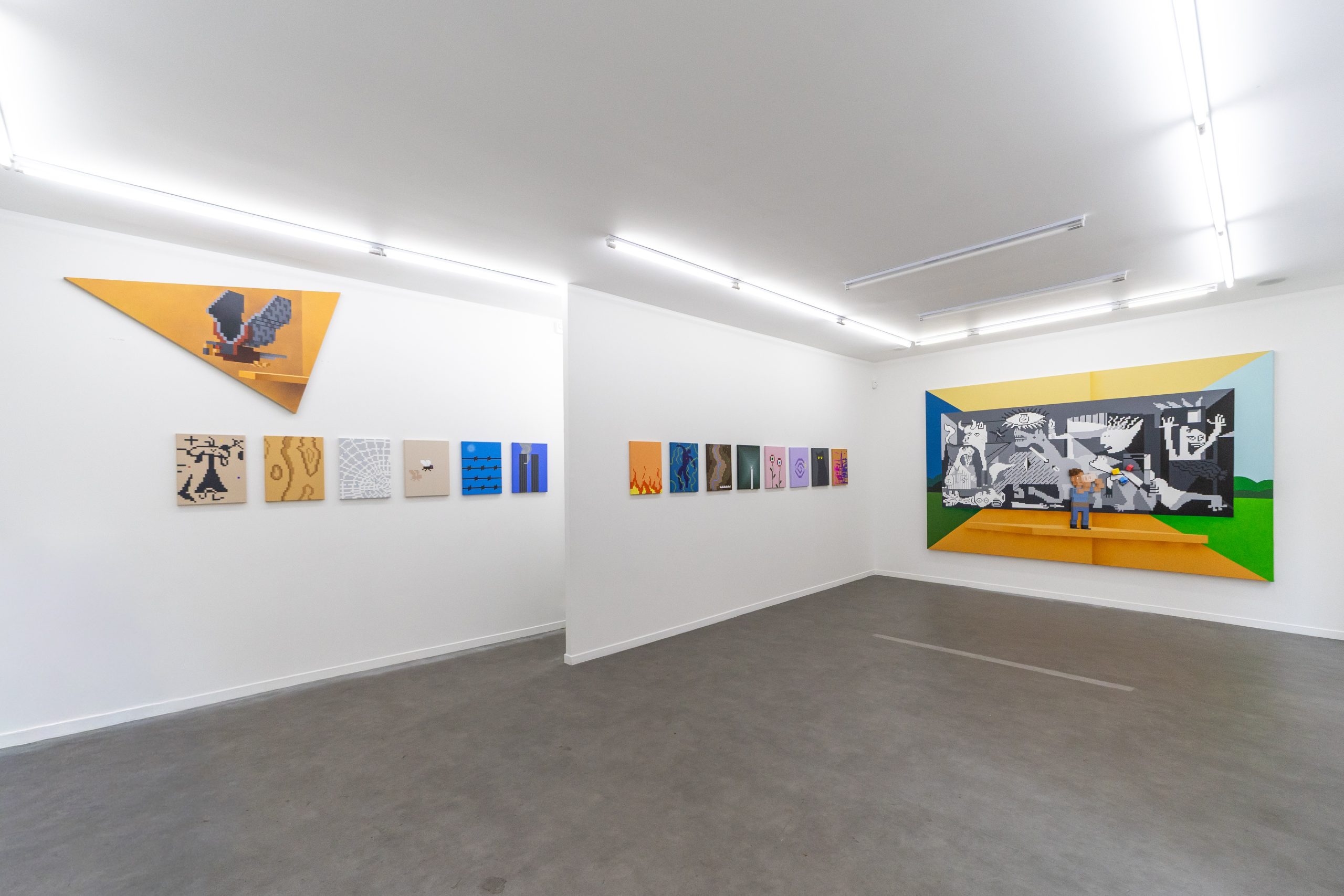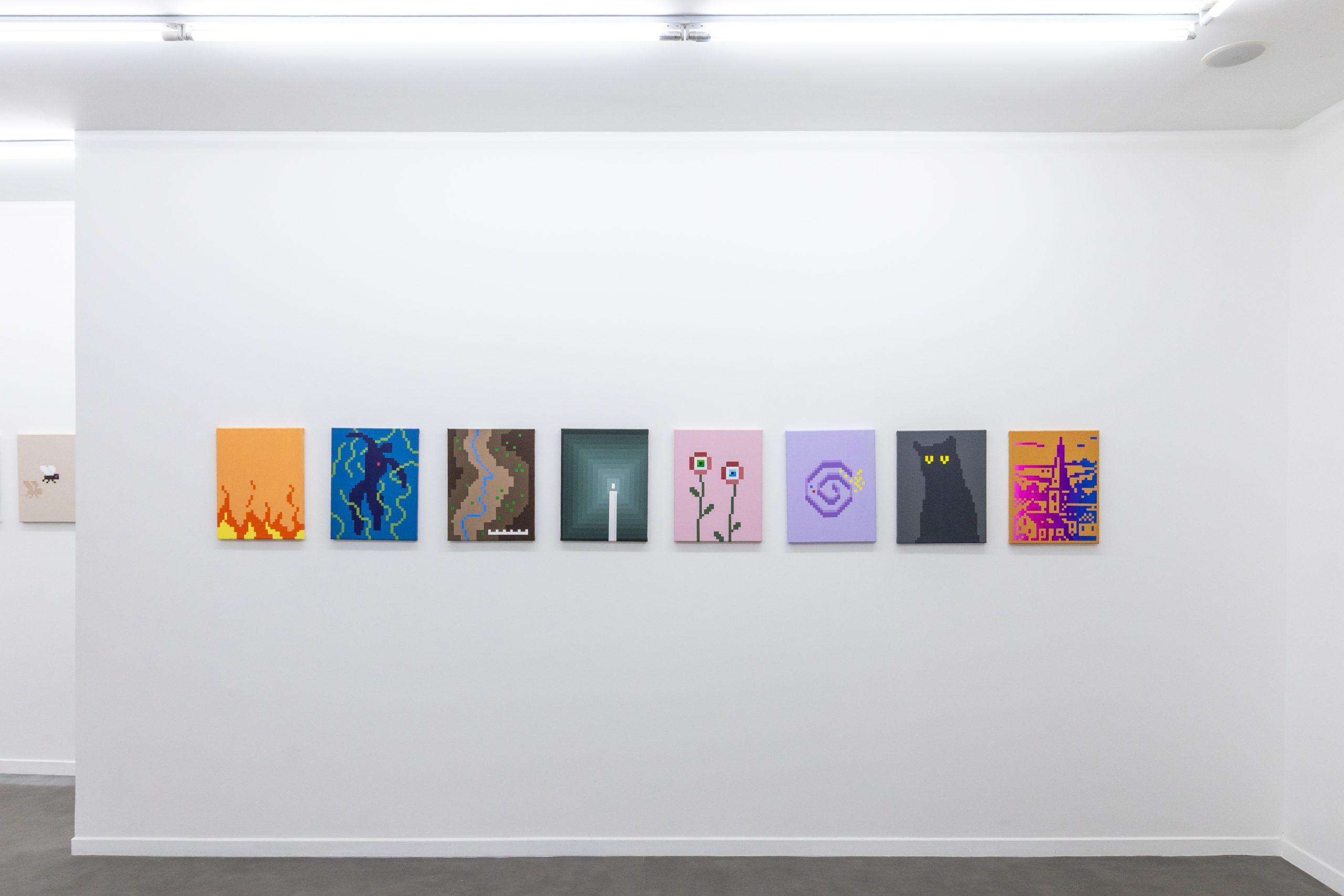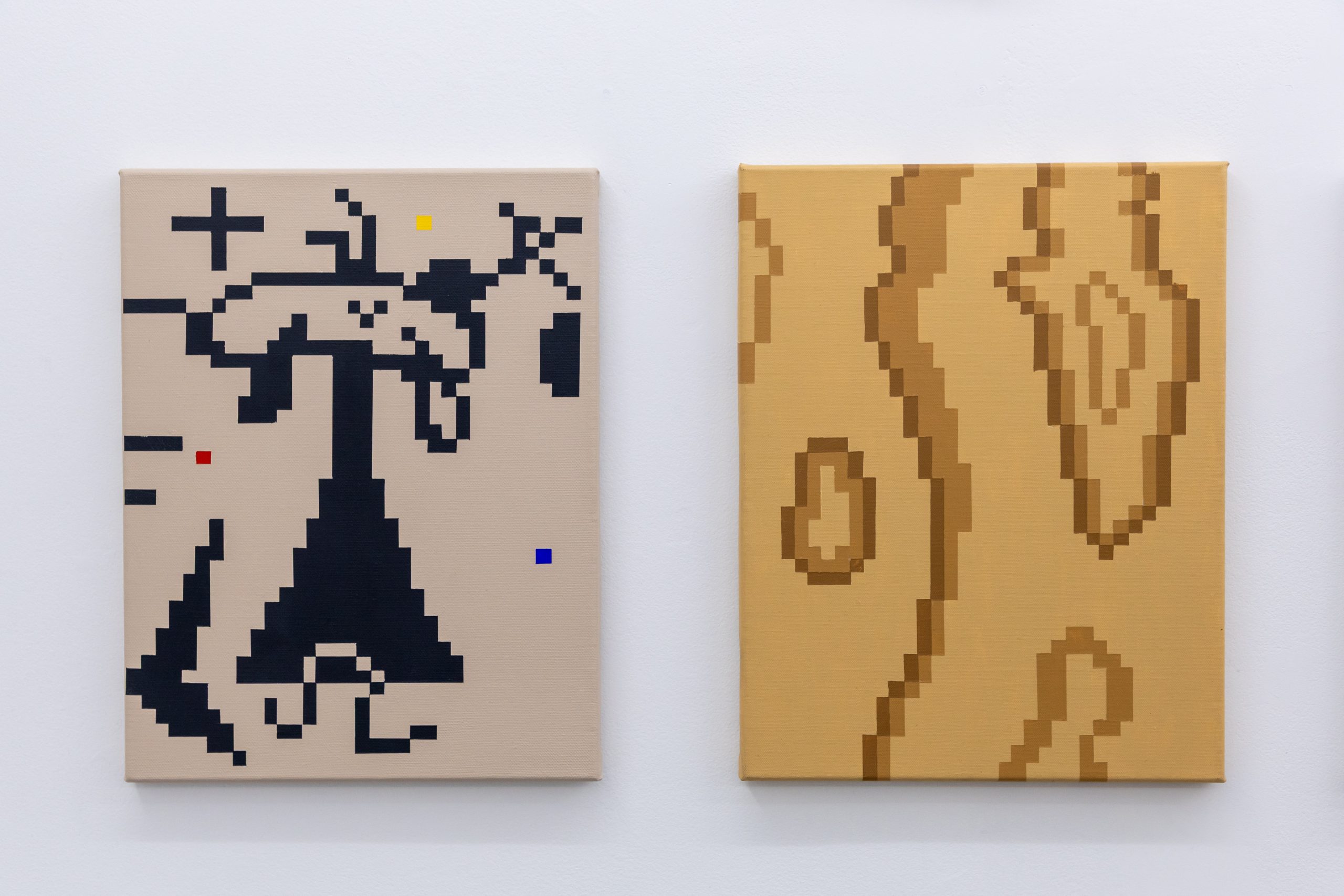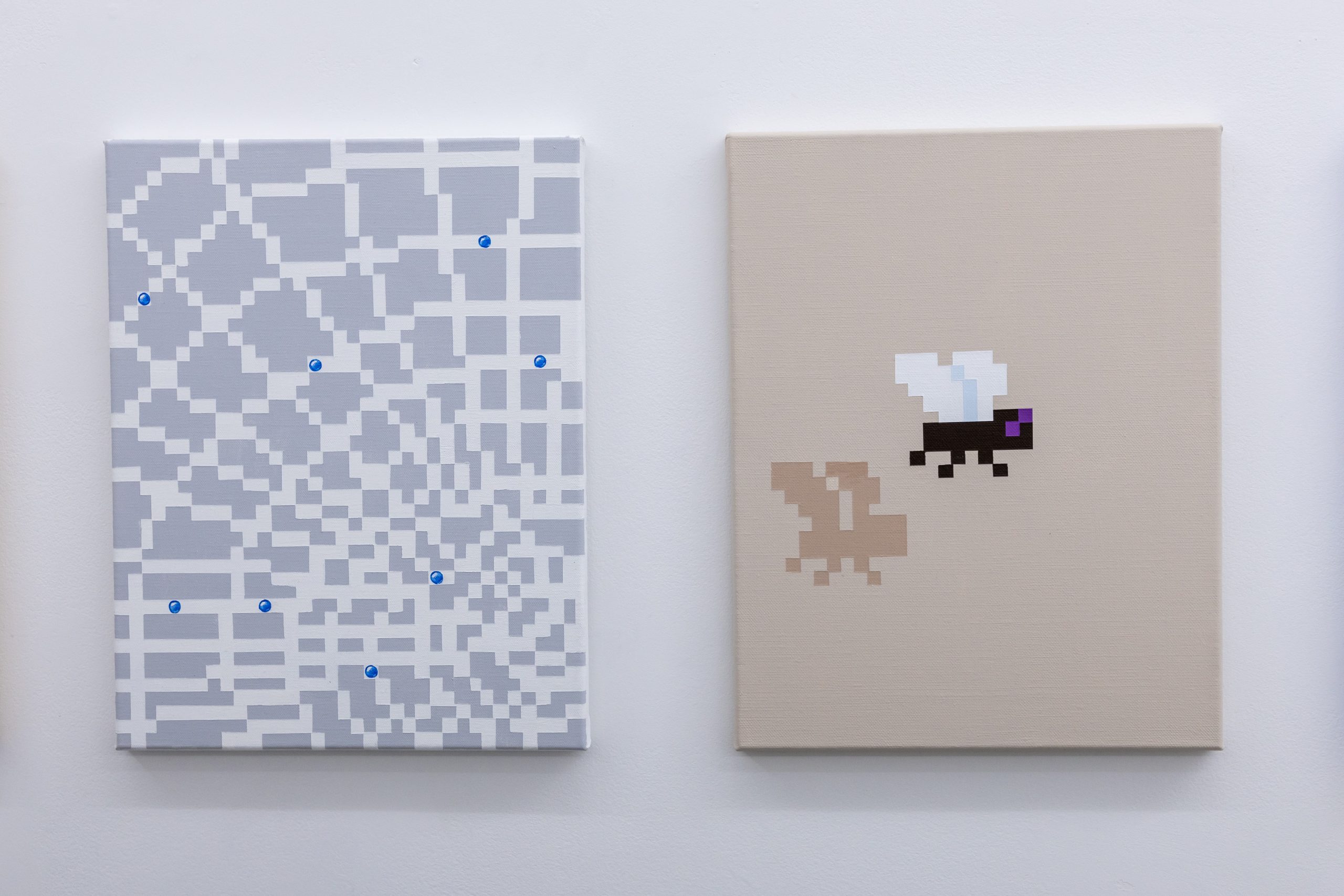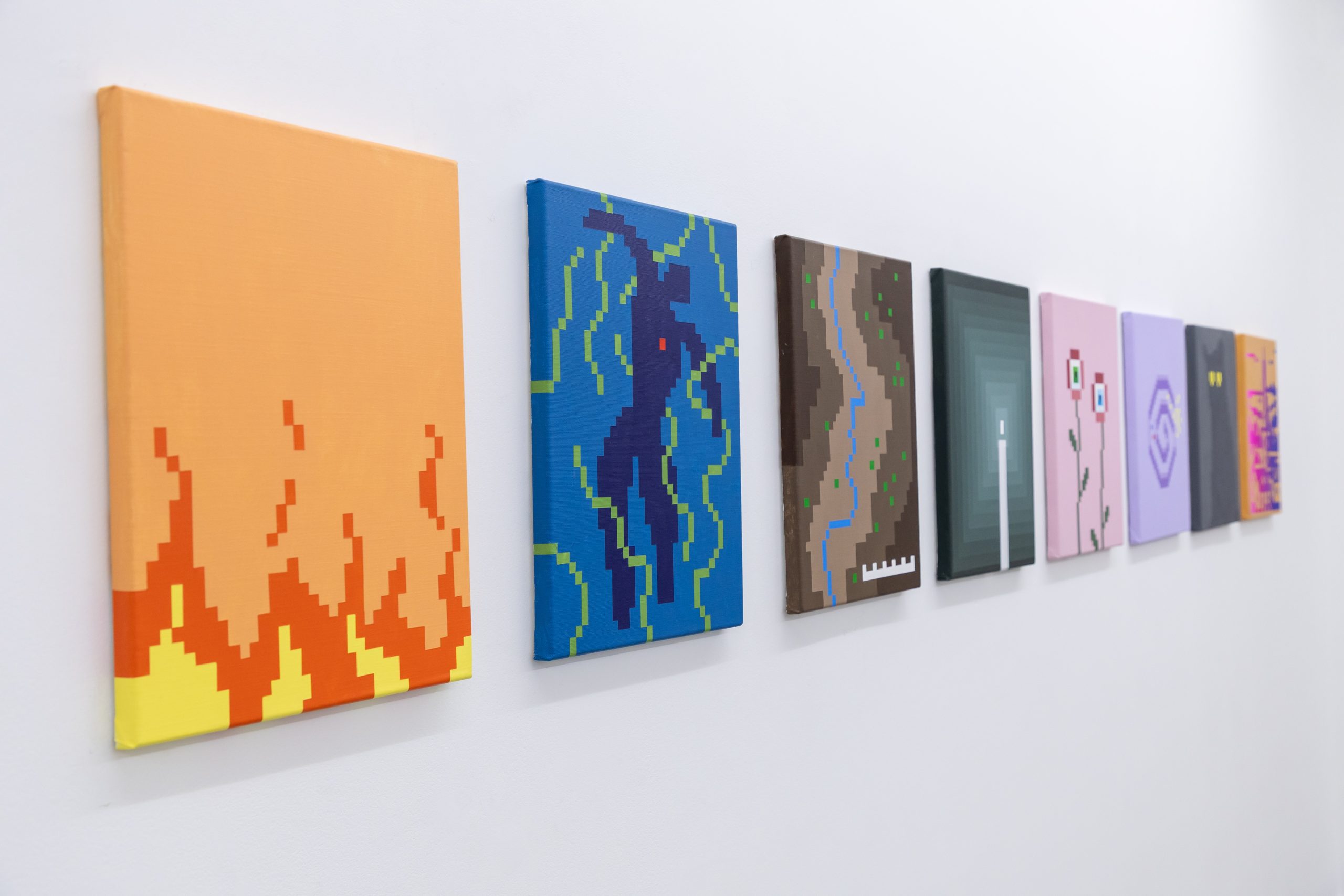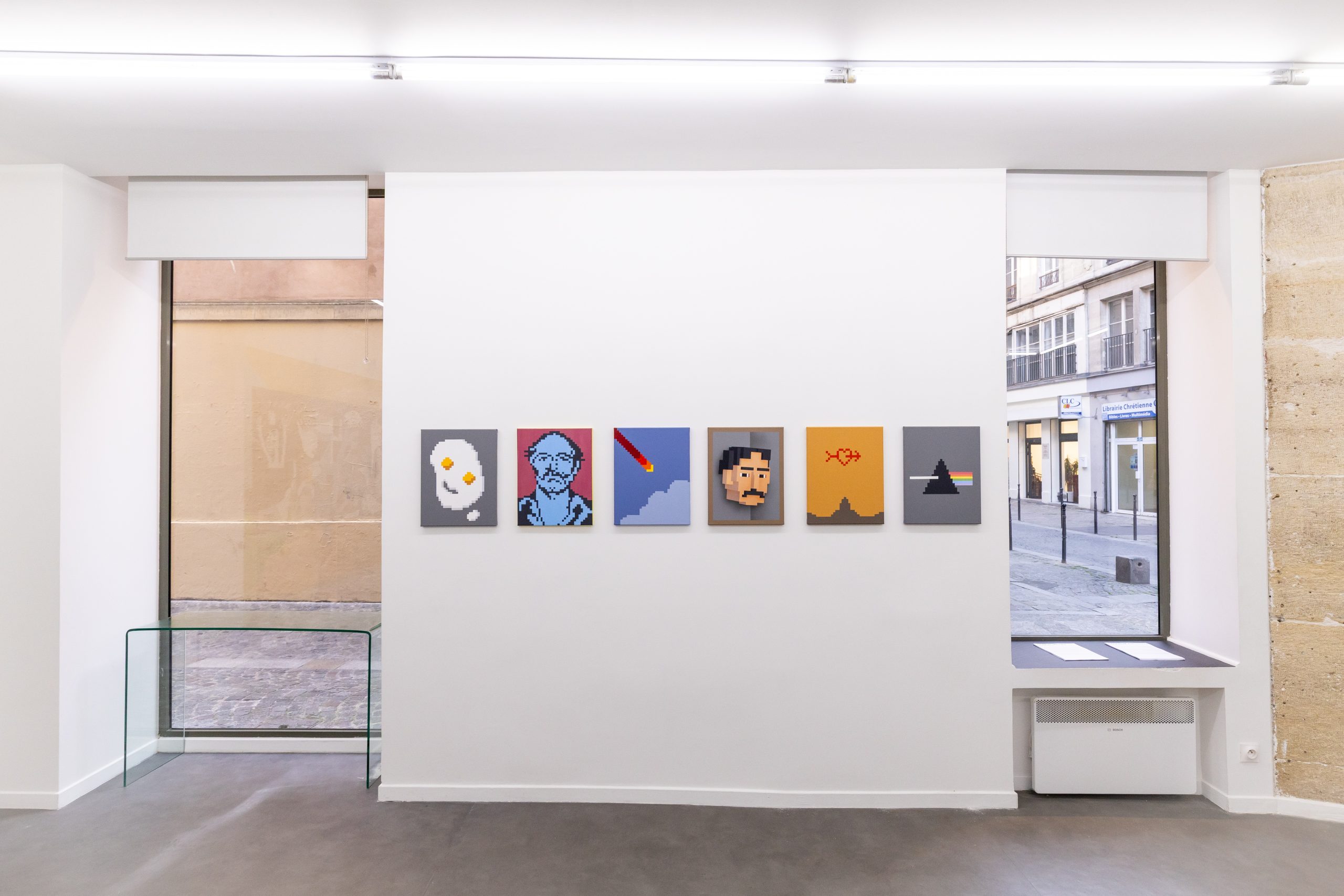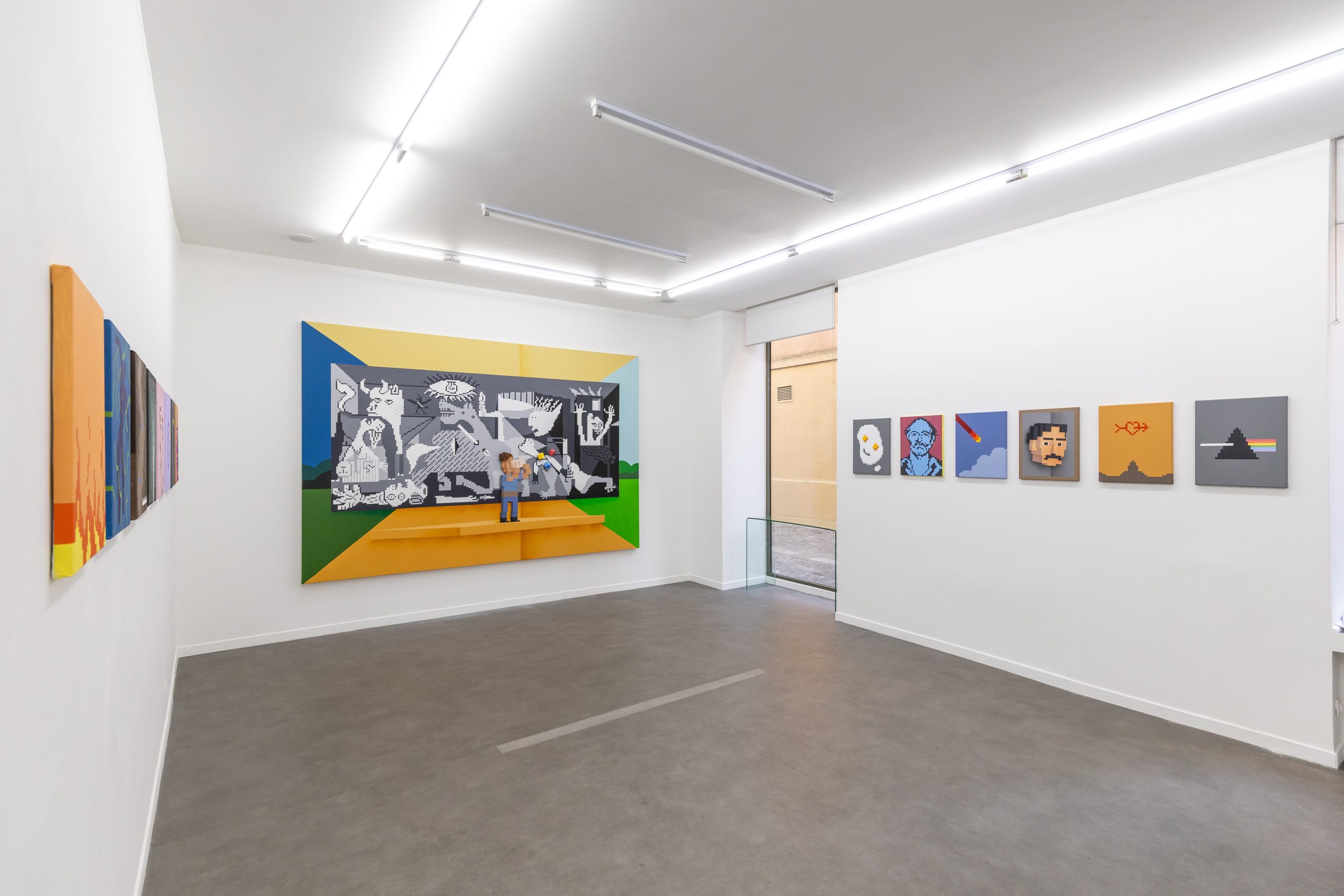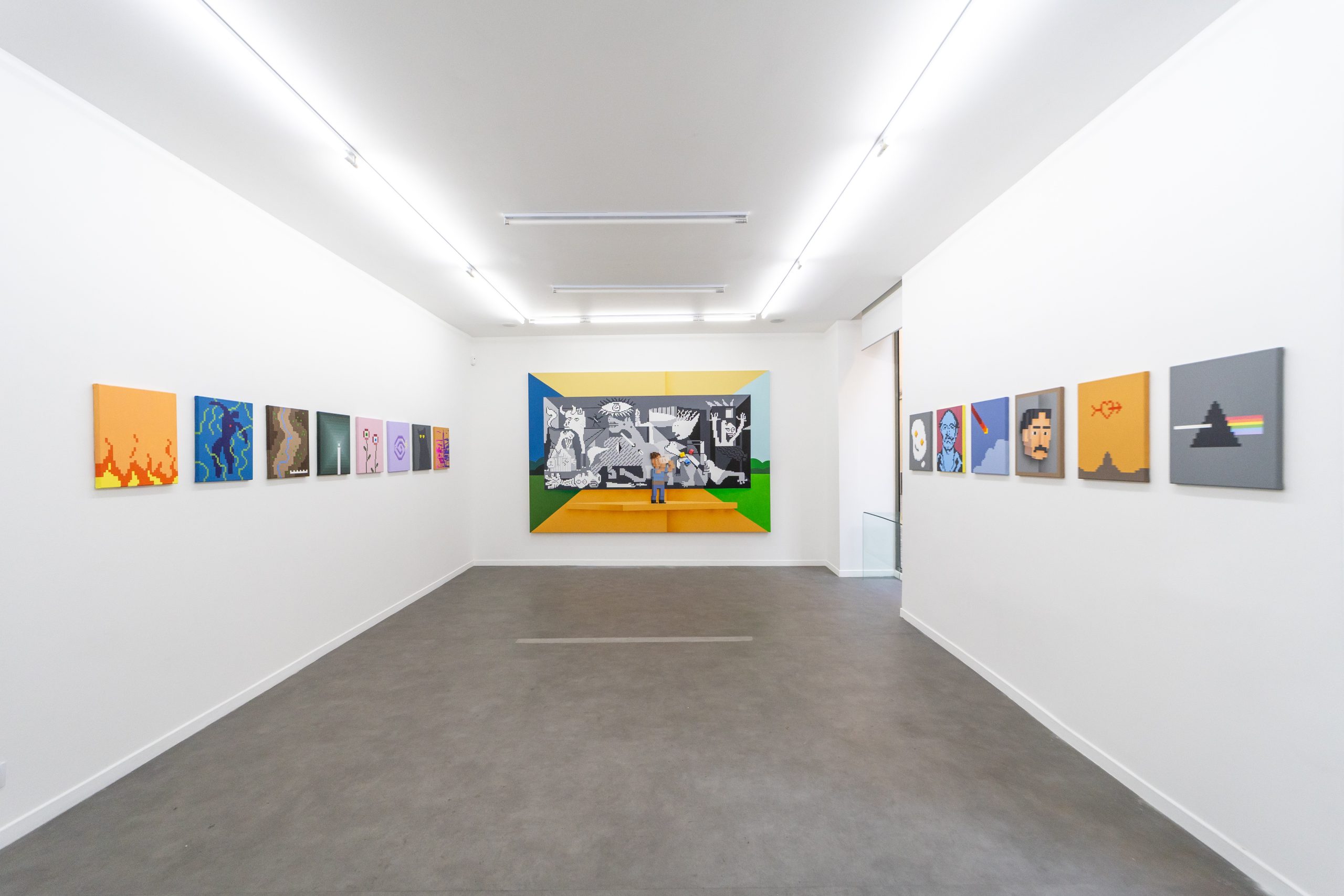
A Franco-Iranian artist who experienced exile in childhood, Sépànd Danesh finds refuge, through his painting, in the geometric representation of an angle. At the intersection of two walls lies an interval — a corner in which to withdraw, rebuild an identity, and arrange childhood memories. Within this contained space, a dead end with a closed horizon, the artist nonetheless discovers infinity. It is crossed by a vertical line that simultaneously cleaves the space in a fracture and points toward the promise of reconstruction.
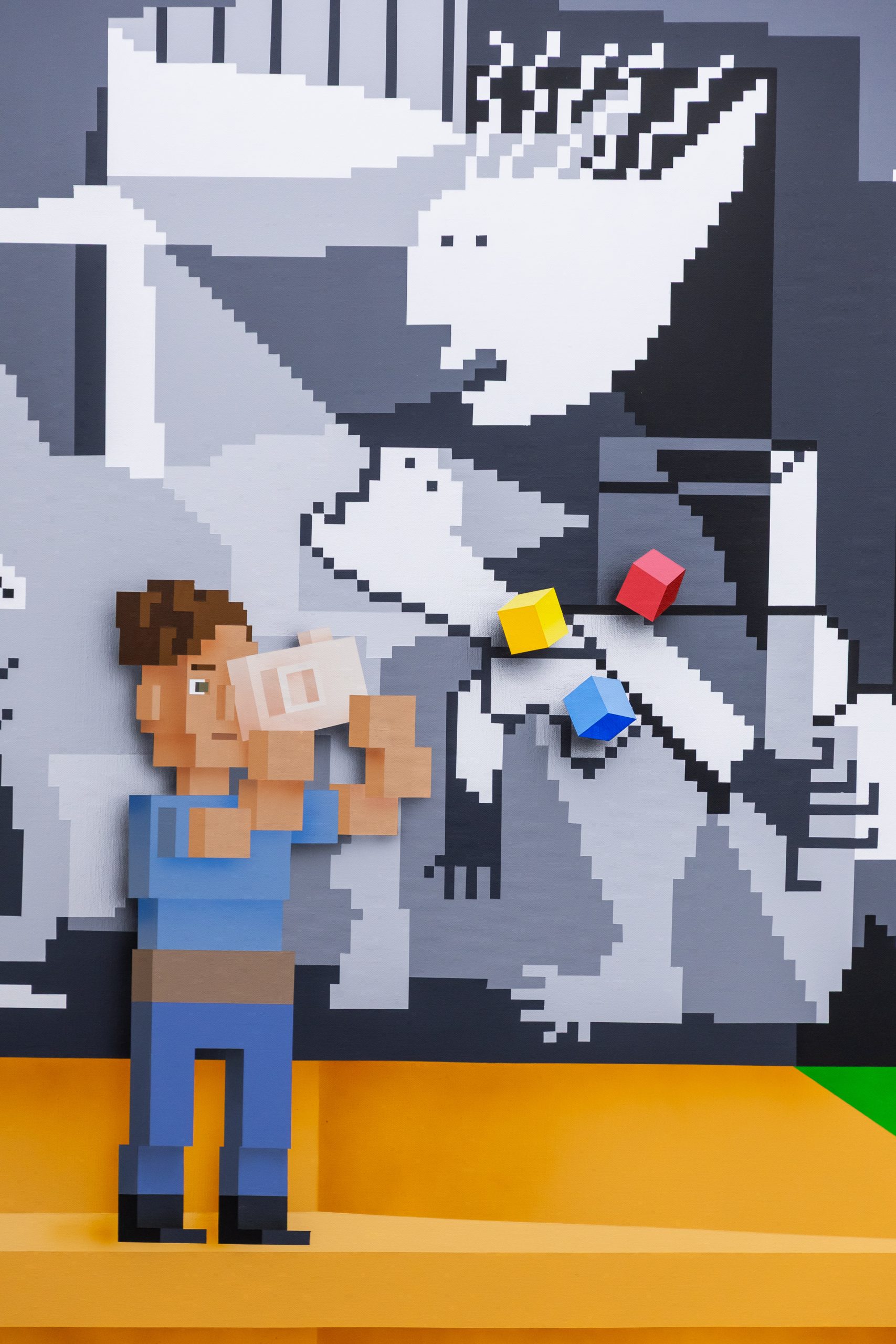
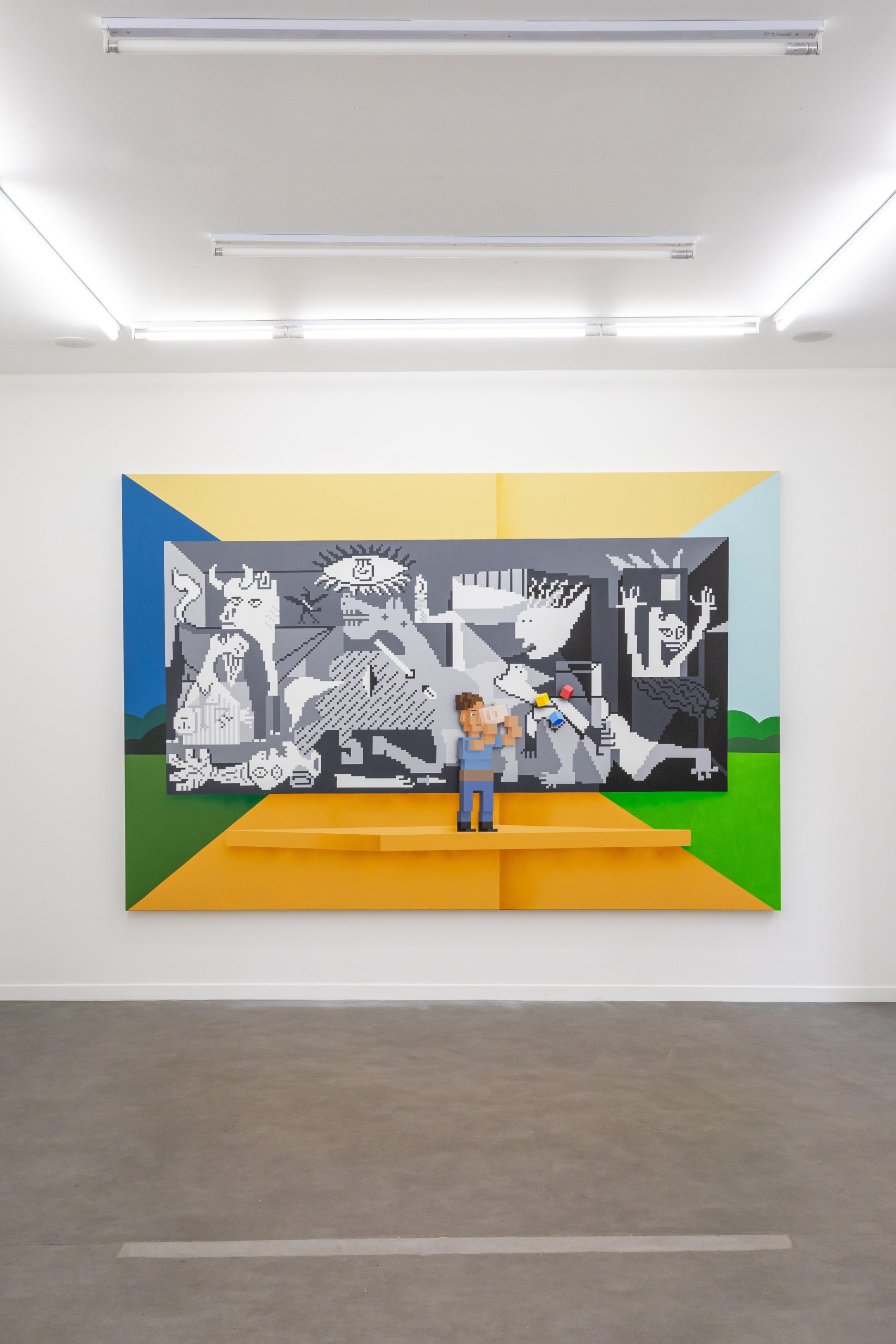
Here, the destruction evoked is that of Pablo Picasso's Guernica reconsidered through the lens of Sépànd's digital and tragicomic aesthetic, and through that of the new warmongering forces that have continued to crush the innocent to this day. To the bodily deformity and fragmentation of Picasso's figures, expressing the atrocity of their suffering, Sépànd adds their pixelated fragmentation: a contemporary equivalent of Roy Lichtenstein's Ben-Day dot, which, through the printing grid of comics, expressed the disintegration of the individual. In Sépànd's work, bodies thus decomposed by the pixel convey a new form of misfortune visited upon the wounded today: their media disintegration, here literally digital. The reality of their suffering is denied by the camera and its operator, who averts their gaze and redirects their attention toward the trivial ; three floating pixels, admittedly in attractive but primary colors, forming no intelligible image.
In Sépànd's work, bodies thus decomposed by the pixel convey a new form of misfortune visited upon the wounded today: their media disintegration, here literally digital. The reality of their suffering is denied by the camera and its operator, who averts their gaze and redirects their attention toward the trivial ; three floating pixels, admittedly in attractive but primary colors, forming no intelligible image.
Fragments burst out of the main canvas and take the form of autonomous elements: glitches, or digital display errors. The work thus overflows its frame, in a logic analogous to the parergon described by Jacques Derrida, whereby peripheral elements participate fully in the construction of meaning. These graphic artefacts extend the fragmentation by dispersing certain details into an isolated visual space, where the figures seem simultaneously to decompose and reconfigure themselves, far from the site of their torment.
Aurélien Simon