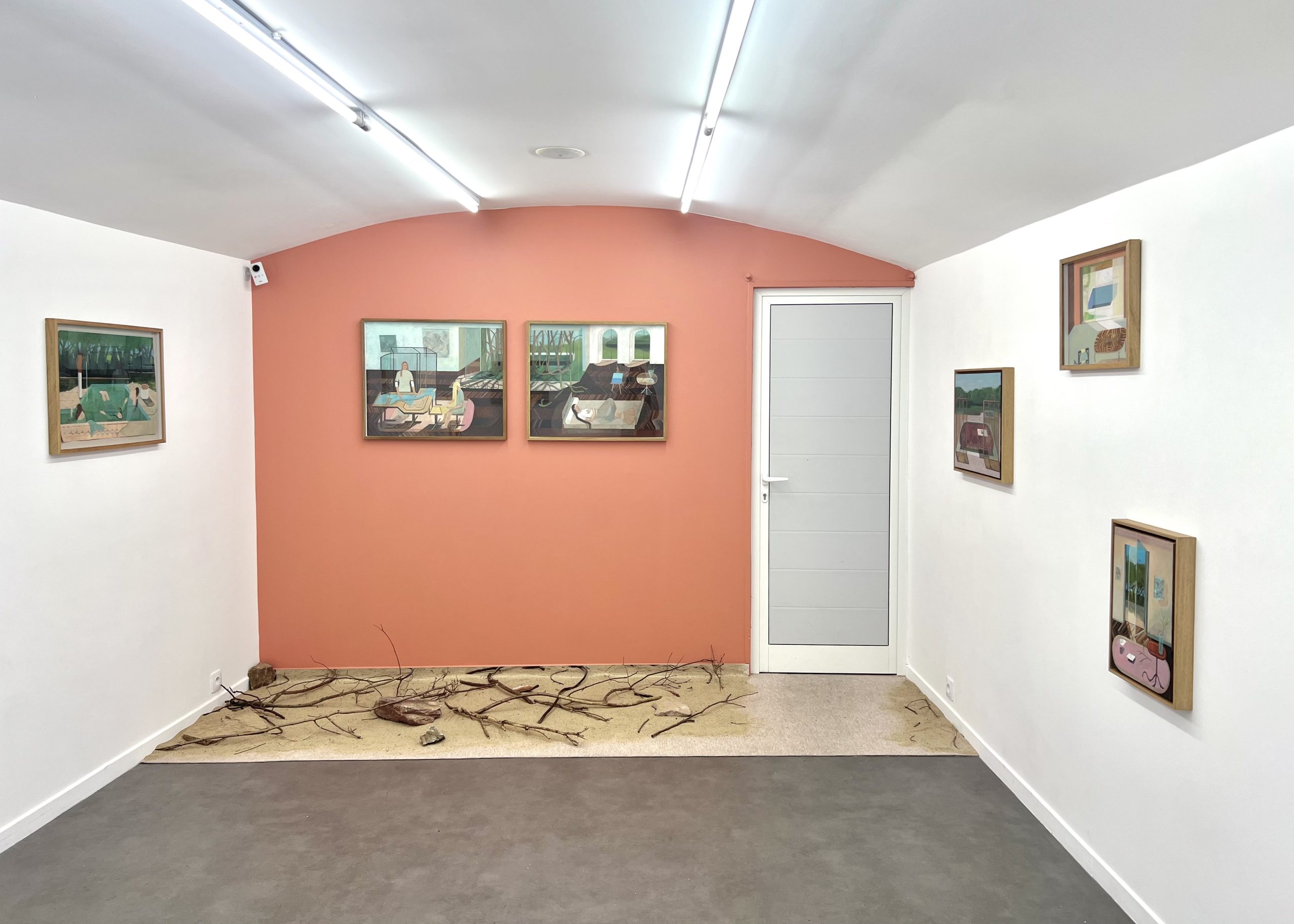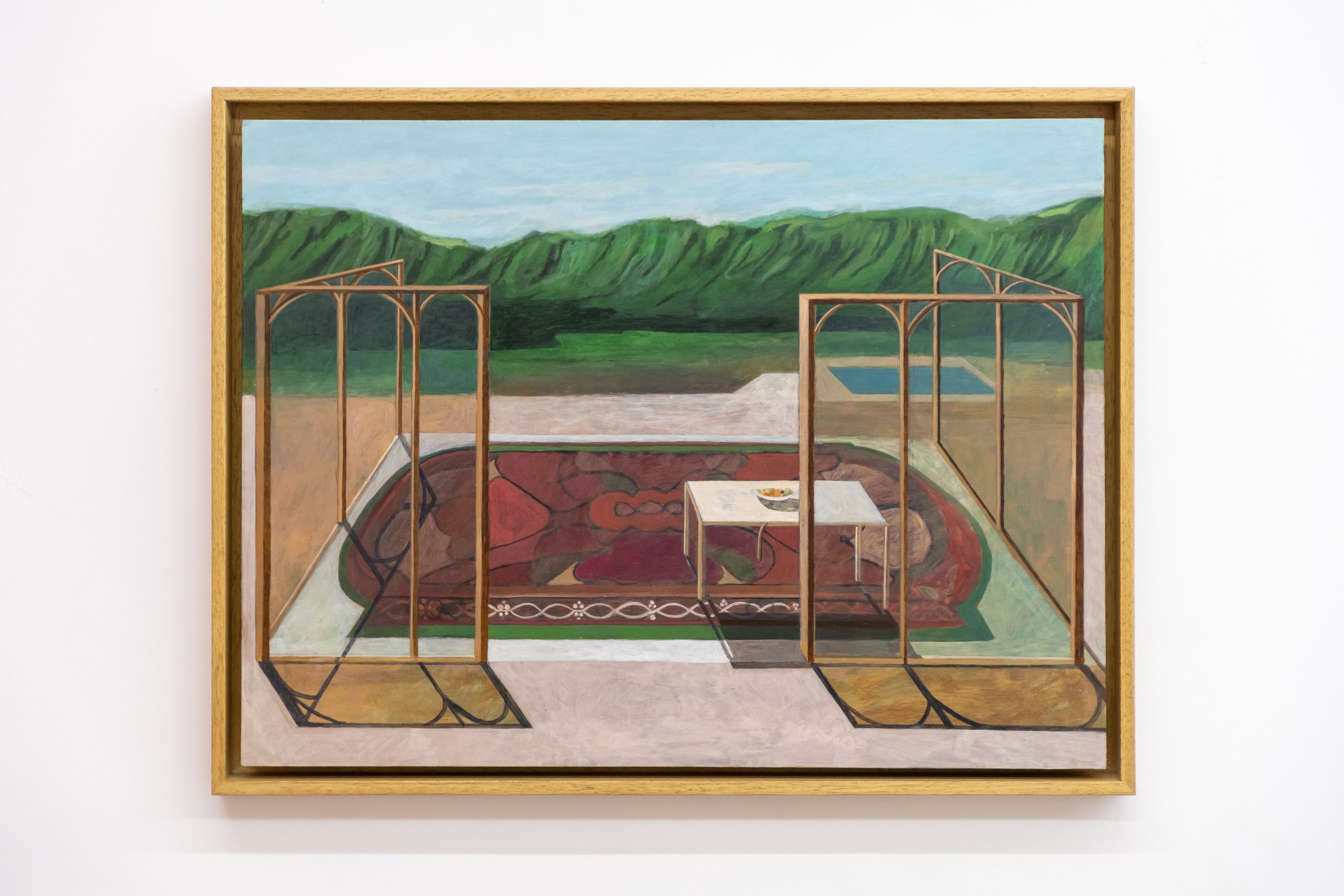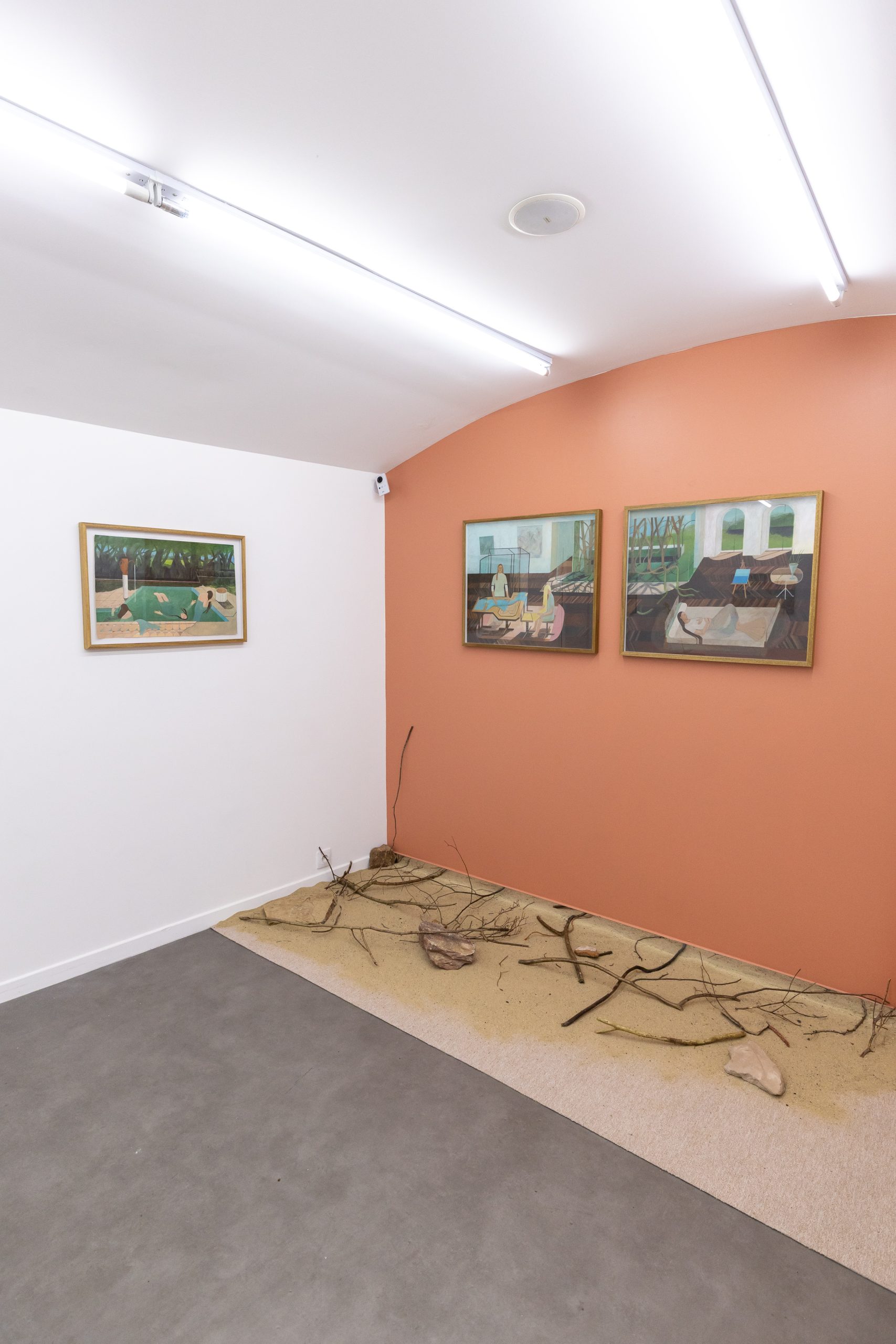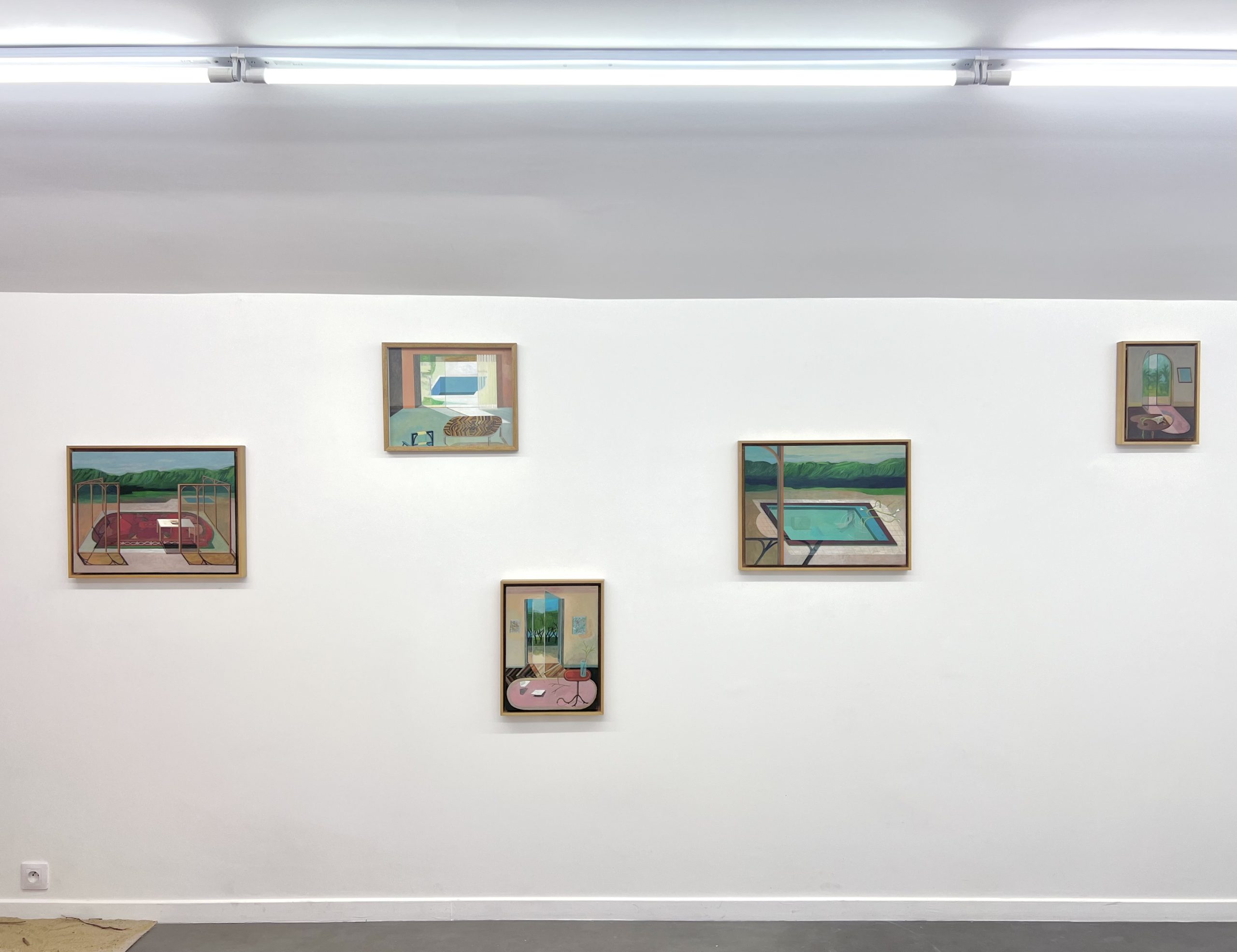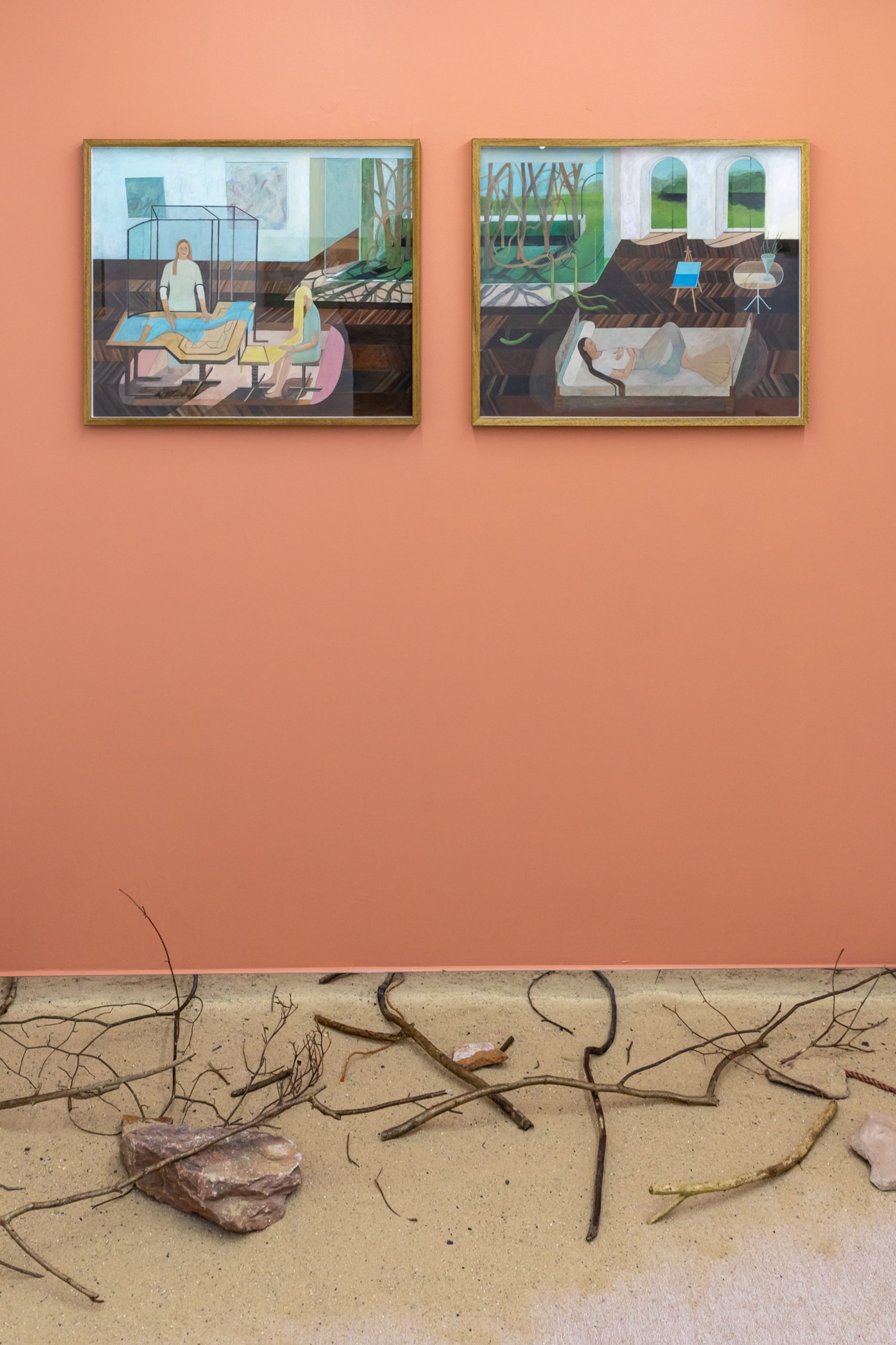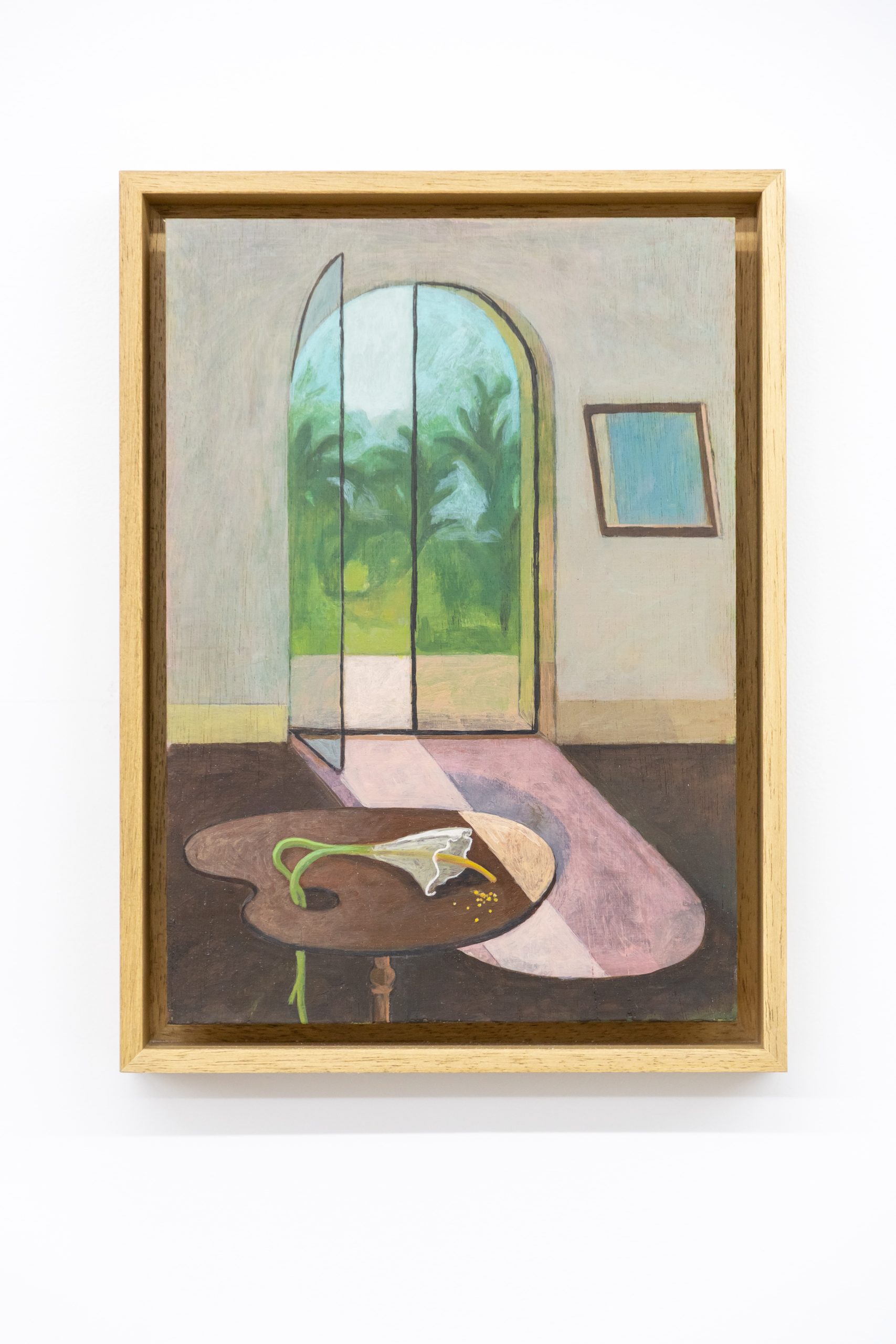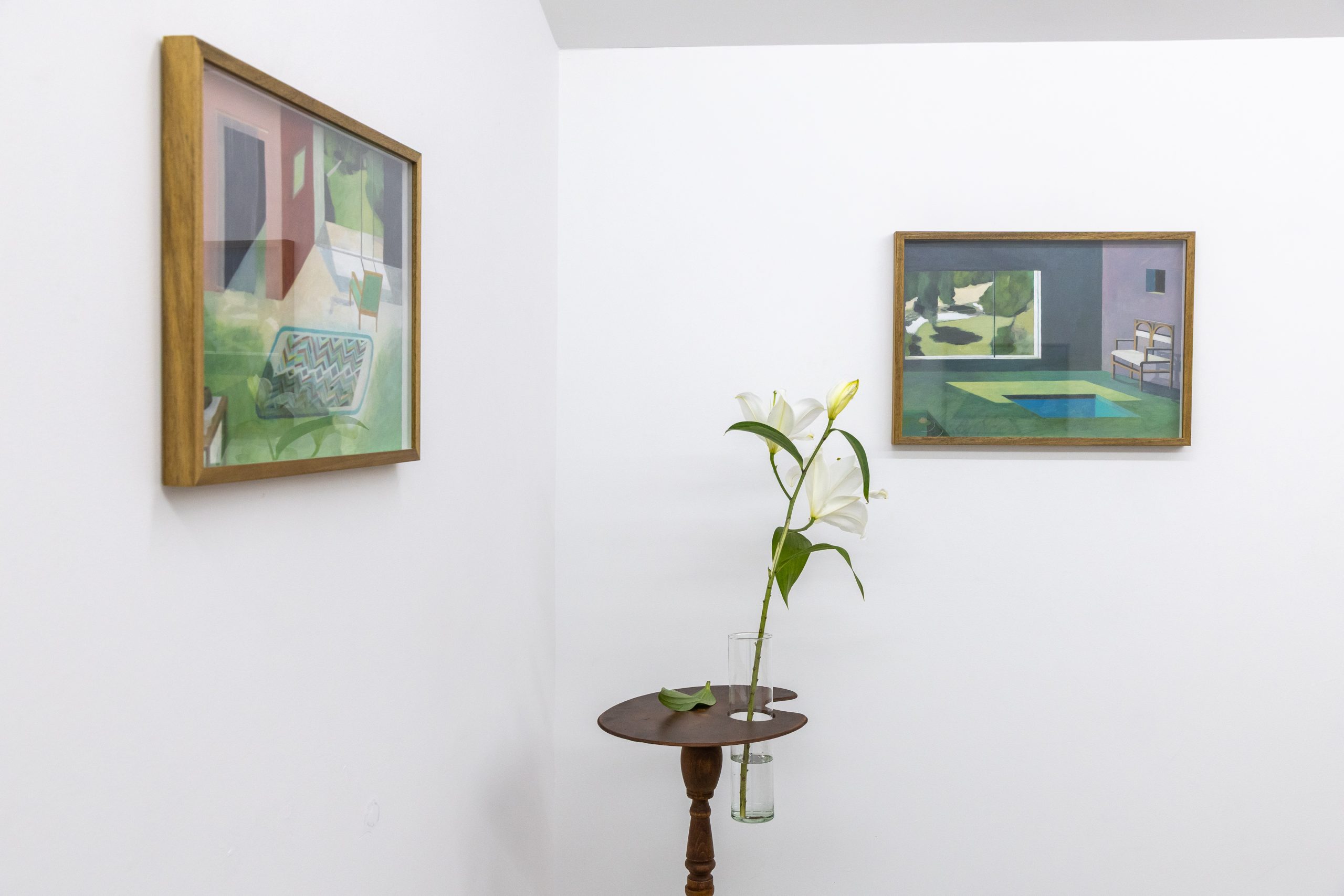
Solène Ortoli draws figurative yet irrational spaces — plunging views whose perspectives compete with one another — in which nature seems to domesticate both places and bodies.
Vacant houses, yet inhabited by an inversion of the domestication process; it is now nature that transforms human habitat, through its grassy and arboreal irruption.
Interior and exterior blur into a dialogue of forms and colours. Greenery makes its way indoors, while the outside is furnished with domestic objects. The two spaces communicate through an absence of partition walls, or through large bay windows behind which the intimacy of the figures is exposed by the transparency of the spaces.
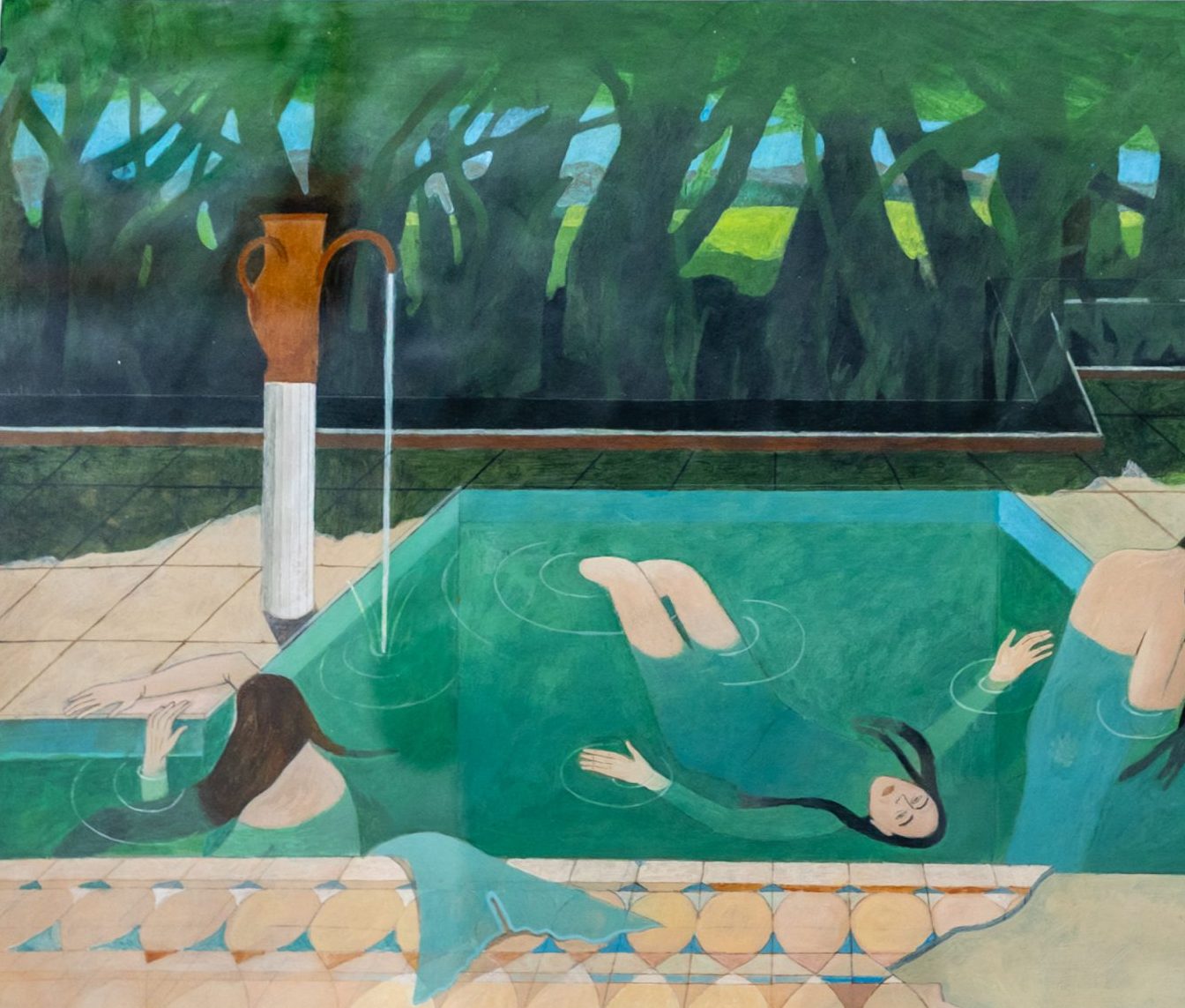
These figures explore their animal origins, visited here by a simian silhouette, there caressing a fluid and spectral ichthyic form, or bathing in a liquid element as if to return to the source of a forgotten nature lying in the depths. Others drift in ambiguity: mermaids frozen mid-transition, held in a passage between their two states — animal and human — and their two distinct realms — the world above and the world below — connected by baths resembling burial vaults.
These water surfaces reflect another world, as do the monolithic beds — that threshold between dream and waking — and the inclined mirrors that open as many loopholes toward an inverted world, much like the "House of the Mirror" of Lewis Carroll's Alice.
With the mirror, Solène handles reflection as a material, giving shape to unsuspected landscapes. This mirror transforms and deepens our reality, overturns its horizon, and reveals to our eyes the image of our own deeper nature.
Aurélien Simon