EVANS MBUGUA
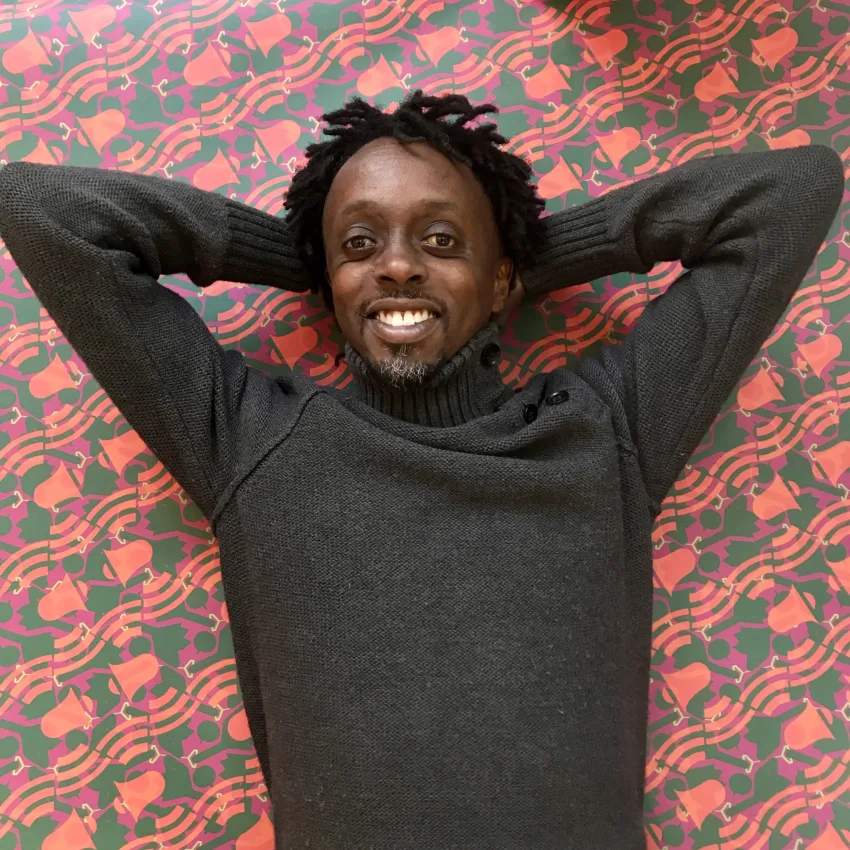
Born in Nairobi in 1979 and now based in Paris, Evans Mbugua explores, with sensitivity and vitality, the place of the individual within society and the visible and invisible ties that connect people to one another and to the world. His work is a celebration of memory, culture, colour, and light.
After graduating with a DNAT (National Diploma in Art and Design) in 2005, Mbugua began his career in visual communication. He worked as an art director in Toulouse, developing strong technical expertise over eight years across fashion, advertising, web design, and packaging. In 2011, he moved to Paris to immerse himself in the city's vibrant contemporary art scene. Two years later, he devoted himself entirely to his artistic practice, culminating in his first gallery exhibition in 2015.
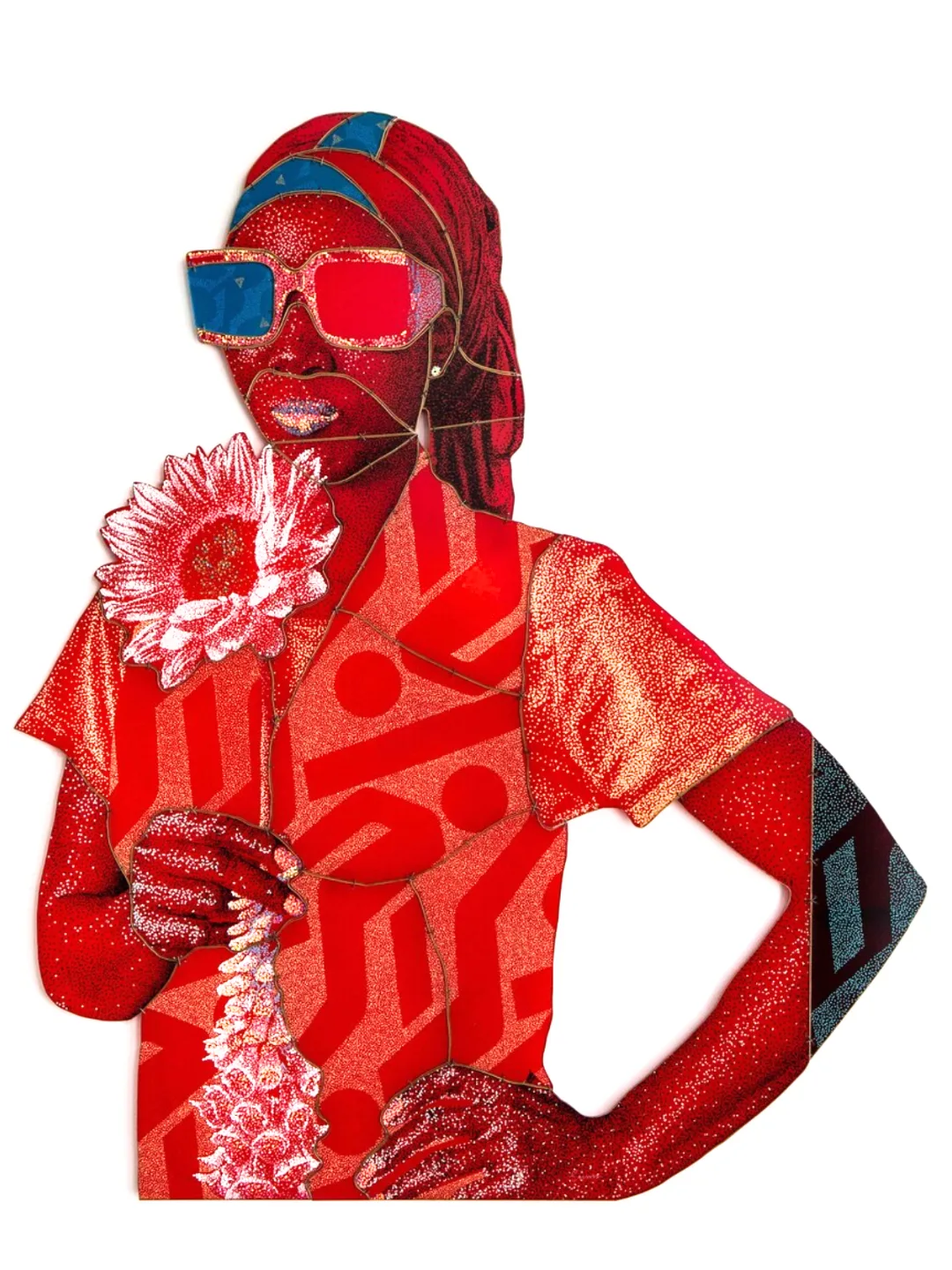
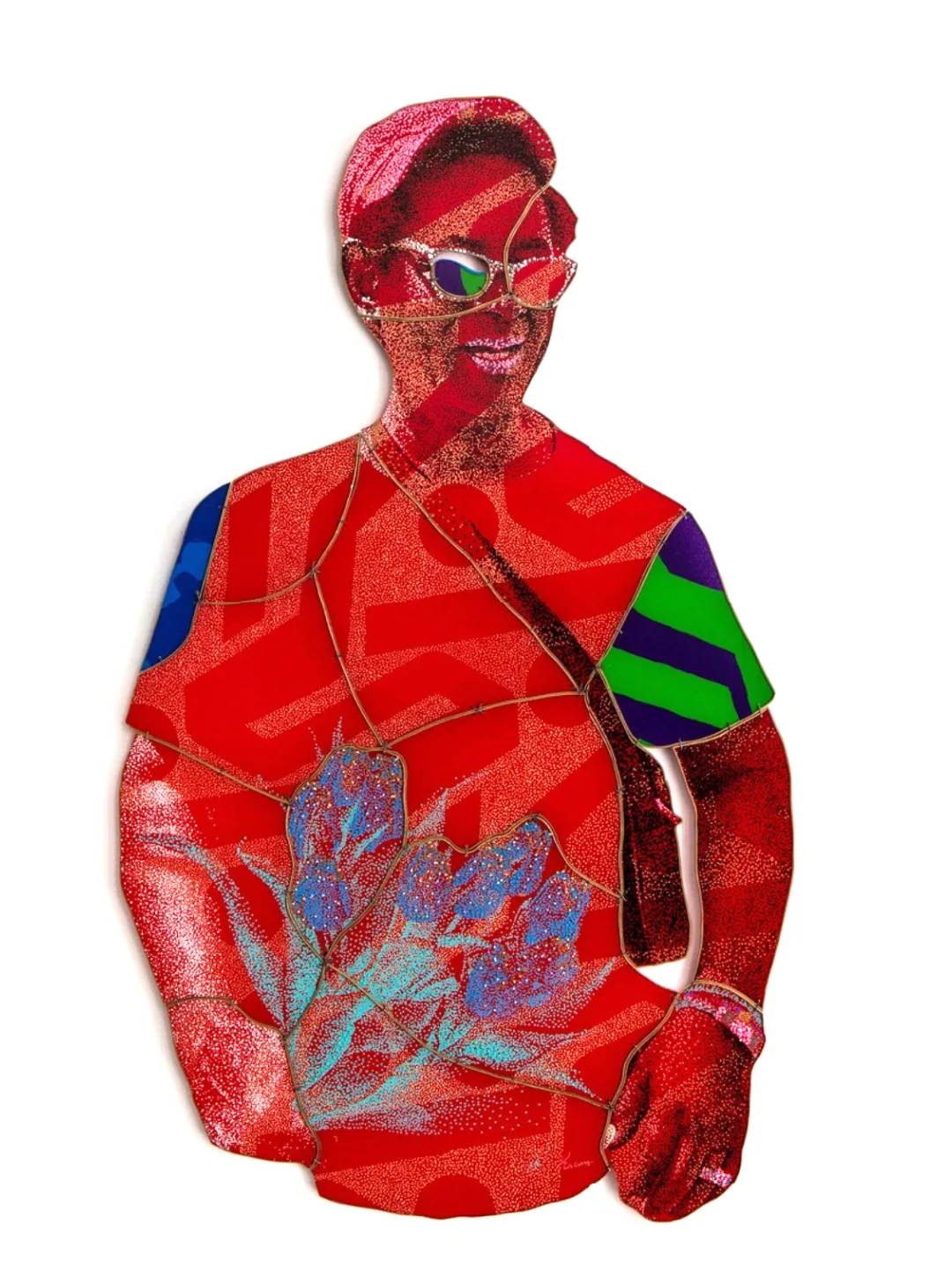
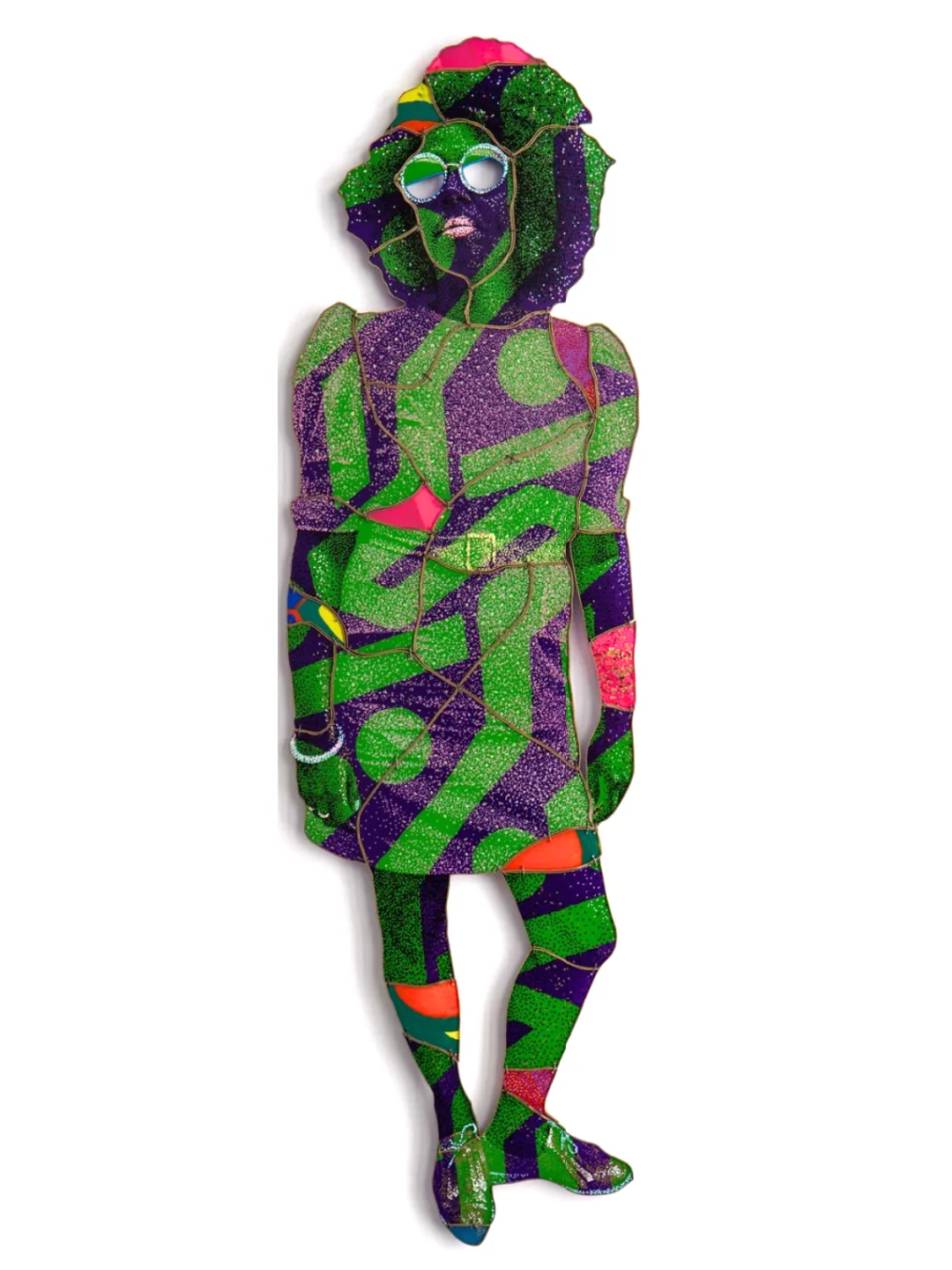
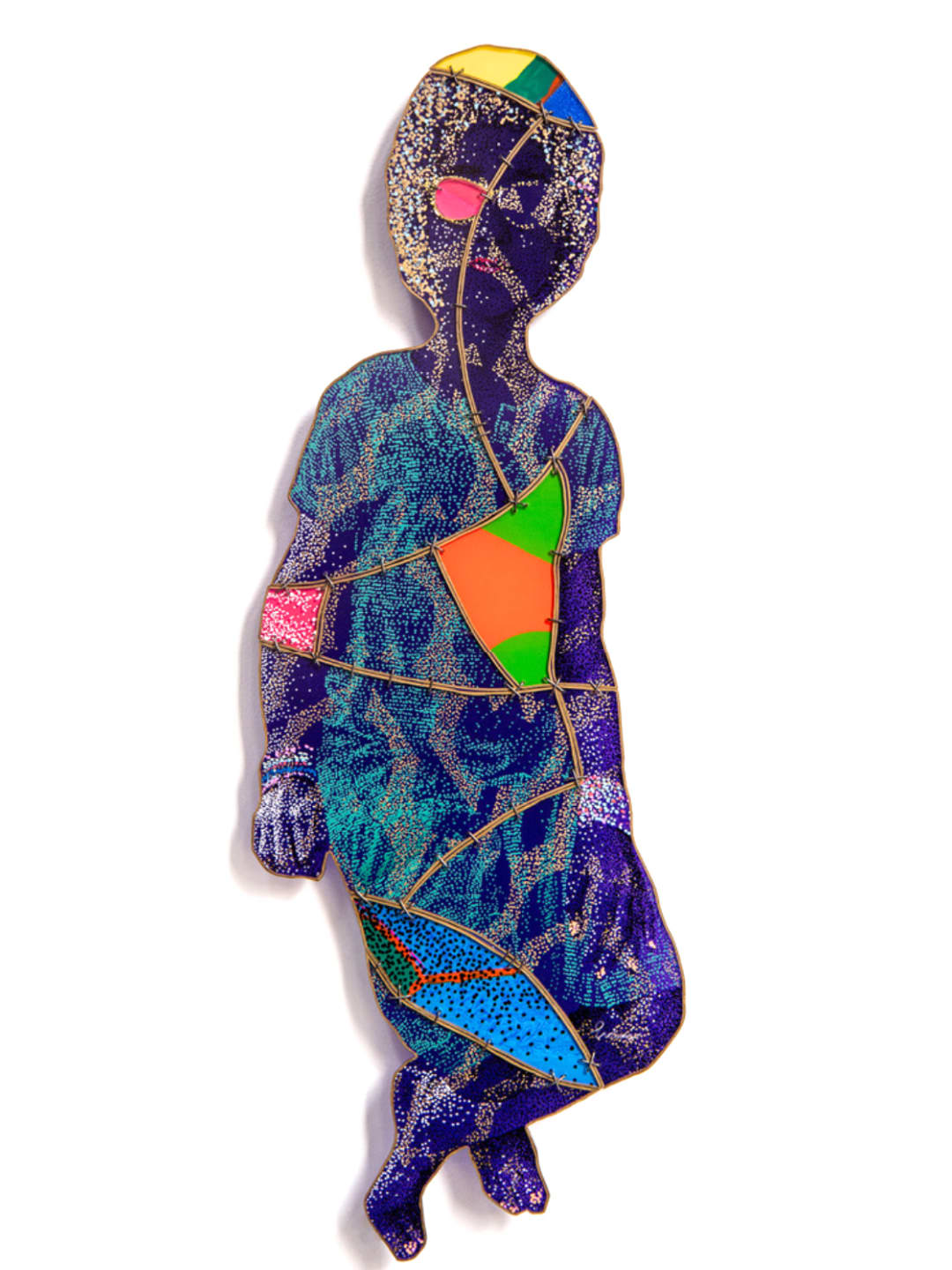
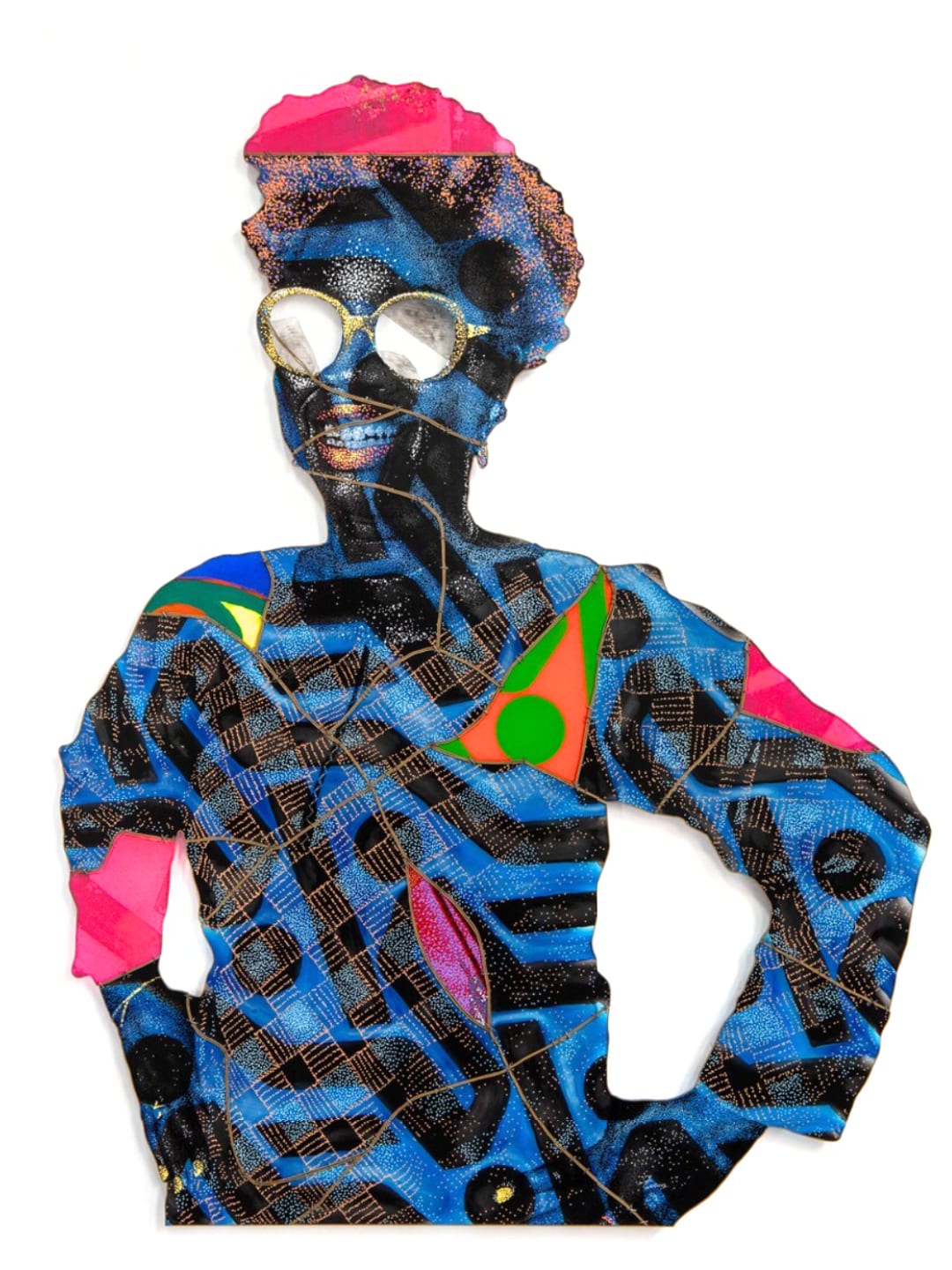
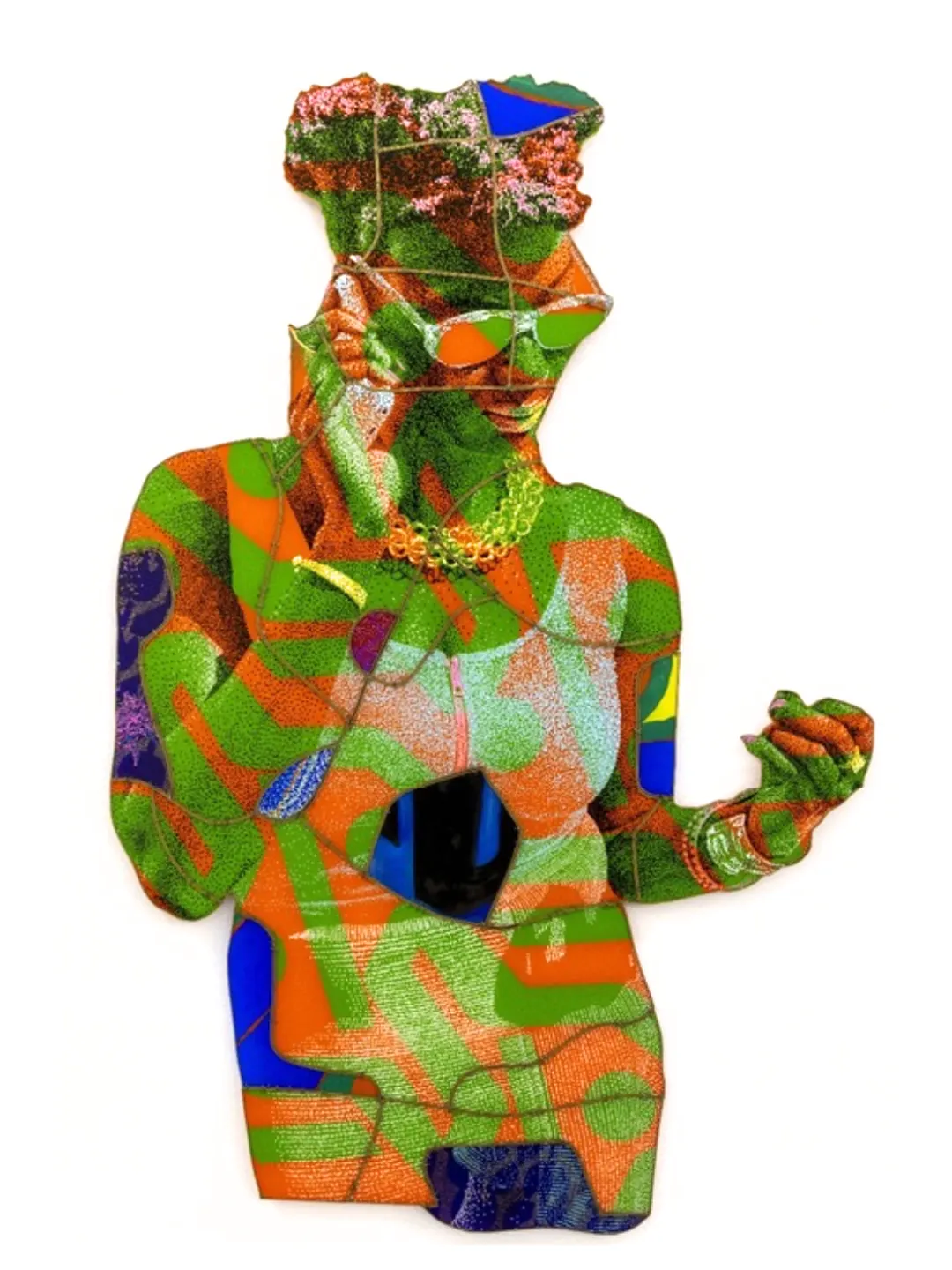
For Mbugua, identity is a living material, composed of layered memories, intersecting histories, and places superimposed across time and space. Drawing from his own experiences, his artistic practice becomes a sensitive cartography of humanity, both intimate and universal. His works are immediately recognizable through their luminous colours and distinctive pointillist technique. Each composition begins with a single dot; the dialogue and vibration between thousands of individual points gradually reveal the final image. Every mark evokes a person, an encounter, a memory, or a language. By bringing these elements together into dynamic compositions, Mbugua creates a visual harmony in which humanity itself becomes pattern, and pattern becomes memory. In his universe, identity is never fixed—it is constantly evolving.
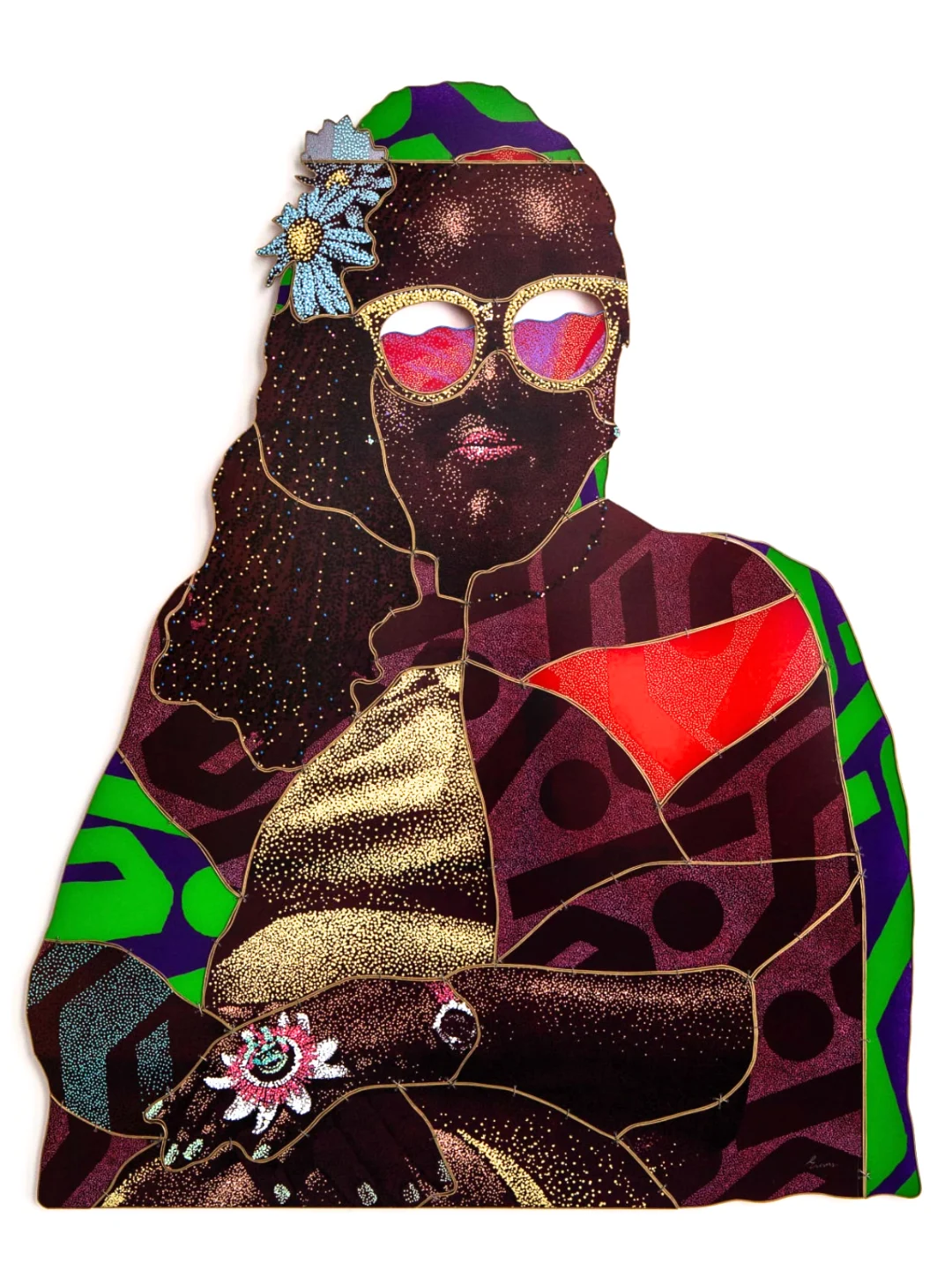
His recent series, Reconstructed Identities, explores themes of trauma, healing, and resilience. Inspired by historical stained glass traditions, Mbugua extends this research through Souwer (reverse glass painting), an ancestral technique shared between Senegal and Kenya that resonates deeply with his cultural heritage. Reinterpreting this tradition without relying on the material construction of stained glass itself, he creates luminous works in which transparency becomes a metaphor for reconstruction.
He also draws inspiration from kintsugi, the Japanese art of repairing broken ceramics with gold, developing a visual language that celebrates fractures rather than concealing them. The emotional and social wounds carried by his figures are reinforced by metal wire that physically binds together the fragmented sections of each portrait. These visible connections transform scars into sources of strength. Rather than erasing trauma, Mbugua reveals it, elevates it, and celebrates it—not as a wound, but as evidence of survival and life.
Through these radiant portraits and scenes, he seeks to capture the emotions of those he depicts—close friends, fellow artists, and members of his family—who form the emotional heart of his practice. Reinterpreting African textiles, symbols, and decorative traditions such as khanga and batik, he reinvents them within a contemporary visual language. Africa—understood not as a singular place but as a dynamic, plural force—occupies a central position in his imagination. Within this universe, pictograms become a language of their own. Much like the hidden messages traditionally woven into khanga fabrics, Mbugua develops a personal symbolic vocabulary in which every sign transcends borders, connecting cultures and collective memories.
His reverse glass paintings become contemporary stained-glass windows. Light moves through them, revealing layered meanings, rhythmic patterns, and luminous constellations of coloured dots that gradually assemble into faces. These portraits seem suspended within the visual flow of Africa—a continent that Mbugua places at the centre of this ever-shifting material.
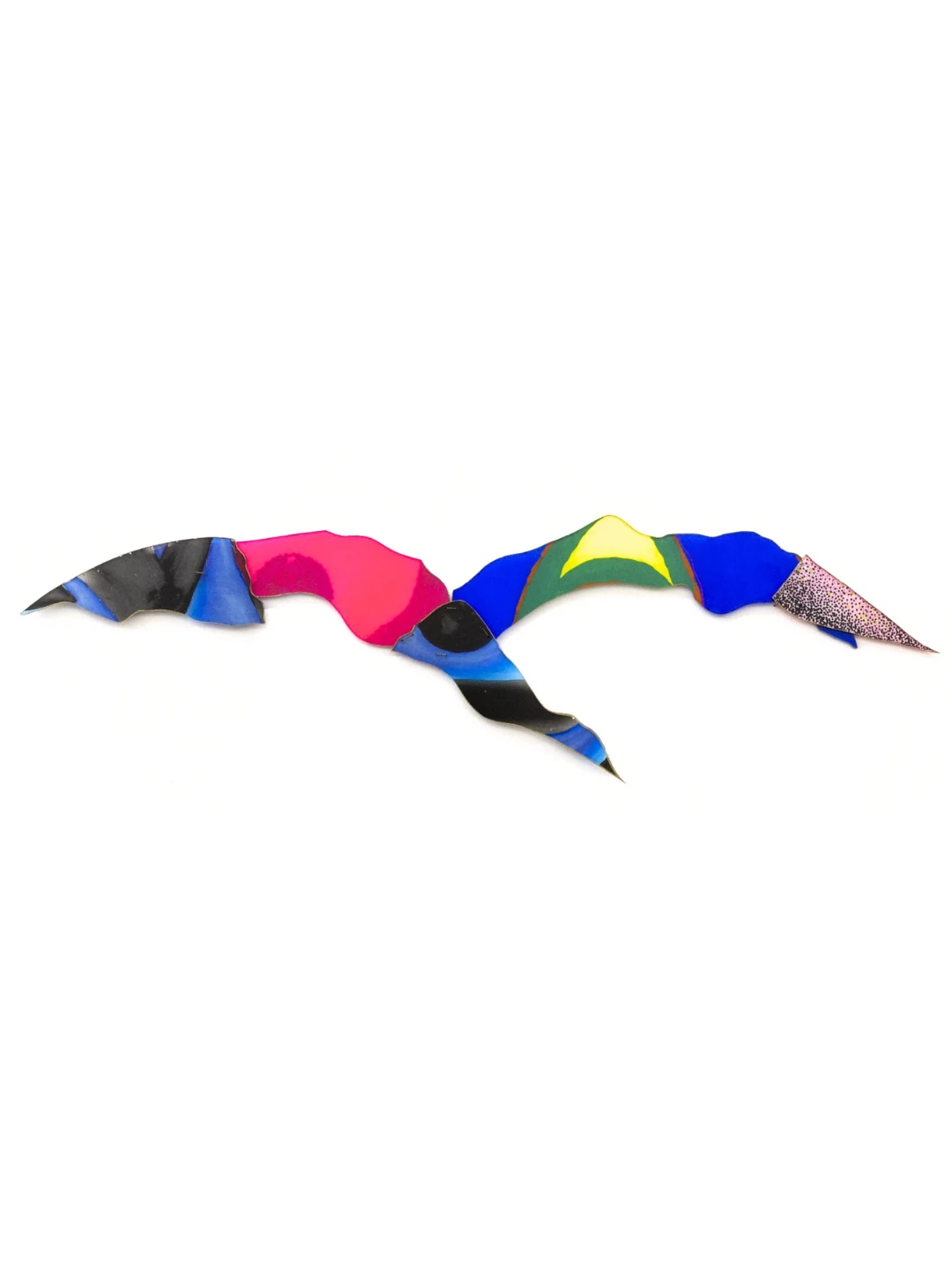
His sculptures, including Macho Hayana pazia (Eyes Have No Curtains) and Before Our Eyes , mark a significant new direction in his practice. They invite viewers to question perception and the place of the individual within a world saturated with information. Mbugua examines our often passive relationship to international events and our sense of powerlessness in the face of global crises. Macho Hayana Pazia, a Swahili expression conveying profound lucidity, evokes the impossibility of closing one's eyes to reality. It encourages us to confront the world as it is, while acknowledging our limited ability to alter its course. These works become both mirrors and windows onto an awakened consciousness, powerfully questioning our responsibility as witnesses.
Throughout his career, Evans Mbugua has developed ambitious collaborations with leading figures in contemporary design and luxury, continually challenging the boundaries between art and design. In 2018, he was invited by the prestigious Parisian jewellery house Chaumet to reinterpret its heritage for the Trésors d'Afrique collection. Inspired by memories from his childhood, he created an original artwork composed of brooches that brought together craftsmanship, light, and symbolism in dialogue with the Maison's iconic jewellery. This collaboration united two worlds: the historic tradition of French high jewellery and Mbugua's vibrant contemporary Pan-African artistic language. He became the first official artist to collaborate on a collection for the House of Chaumet.
In 2024, he collaborated with Infiniment Coty, an artistic project initiated by the international fragrance house Coty. For this occasion, Mbugua conceived a multisensory work in which perfume became a vehicle for memory, emotion, and multiple identities. Exploring the dialogue between scent and vision, he created a sculptural, almost architectural landscape composed of interlocking perfume bottles that together form a hive animated by his signature colourful pointillism.
Exhibited internationally, Evans Mbugua's work is now held in numerous public and private collections, including the agnès b. Collection, the Fondation Gandur pour l'Art, the Bibliothèque nationale de France (BnF), and the Art in Embassies collection of the U.S. Department of State.