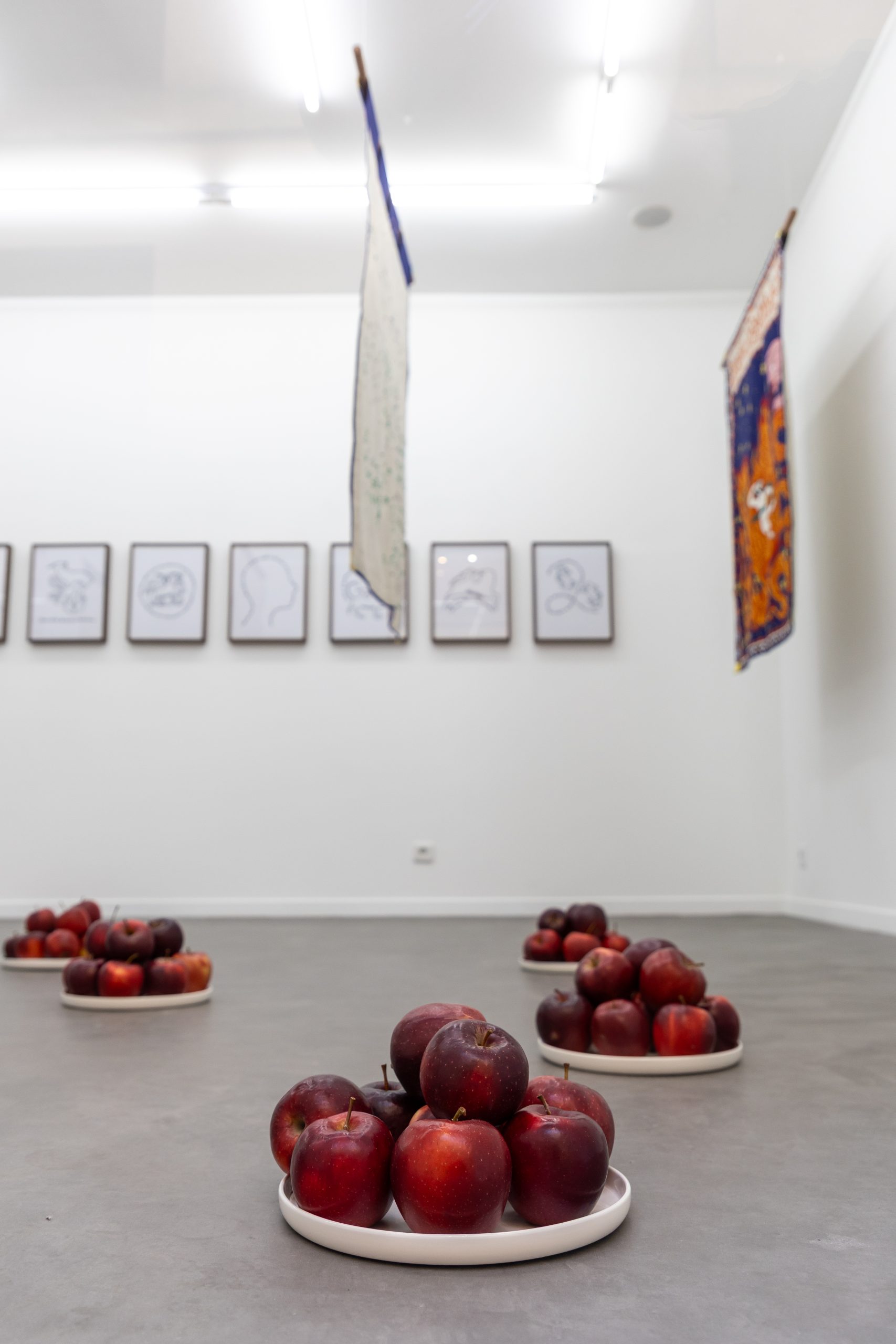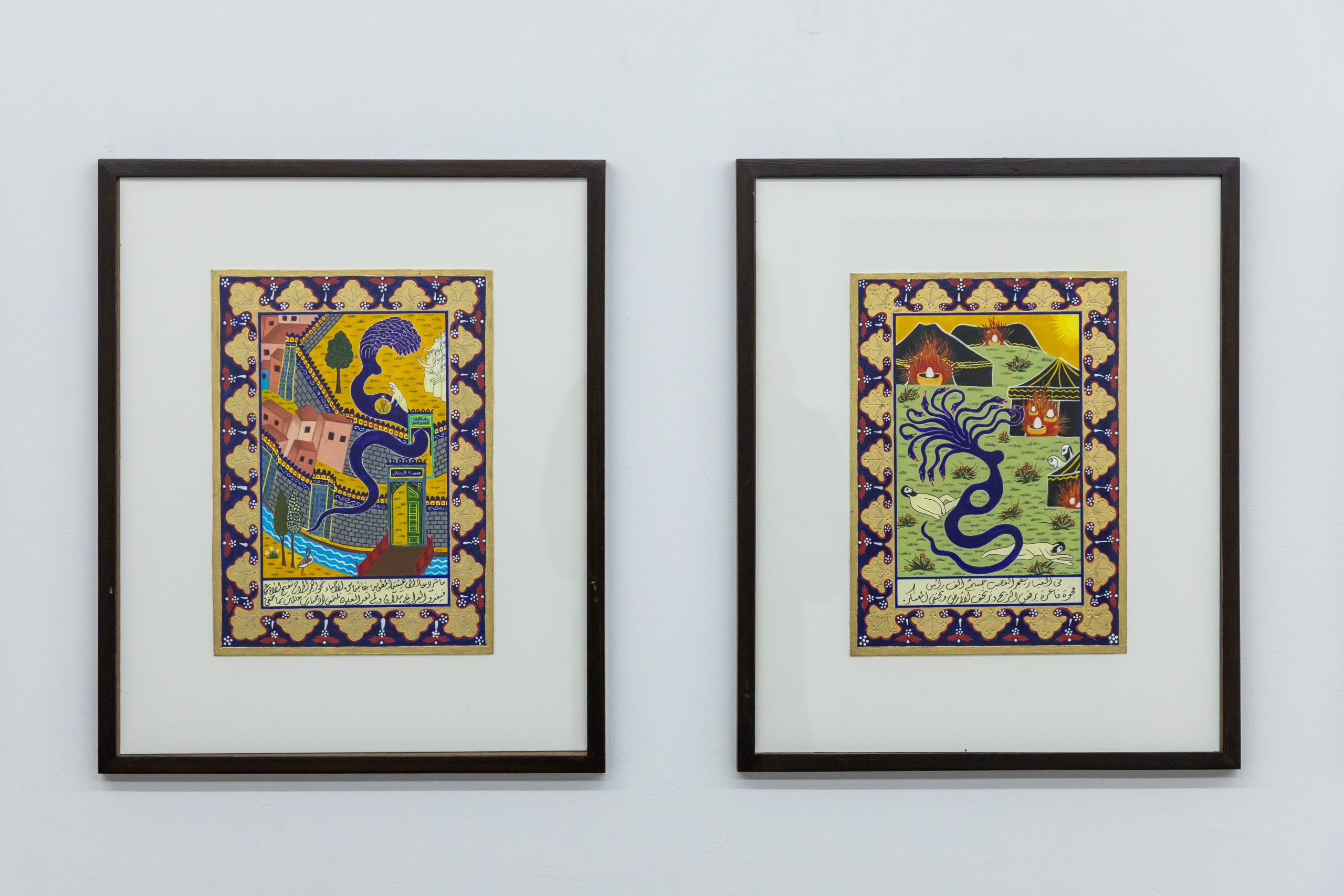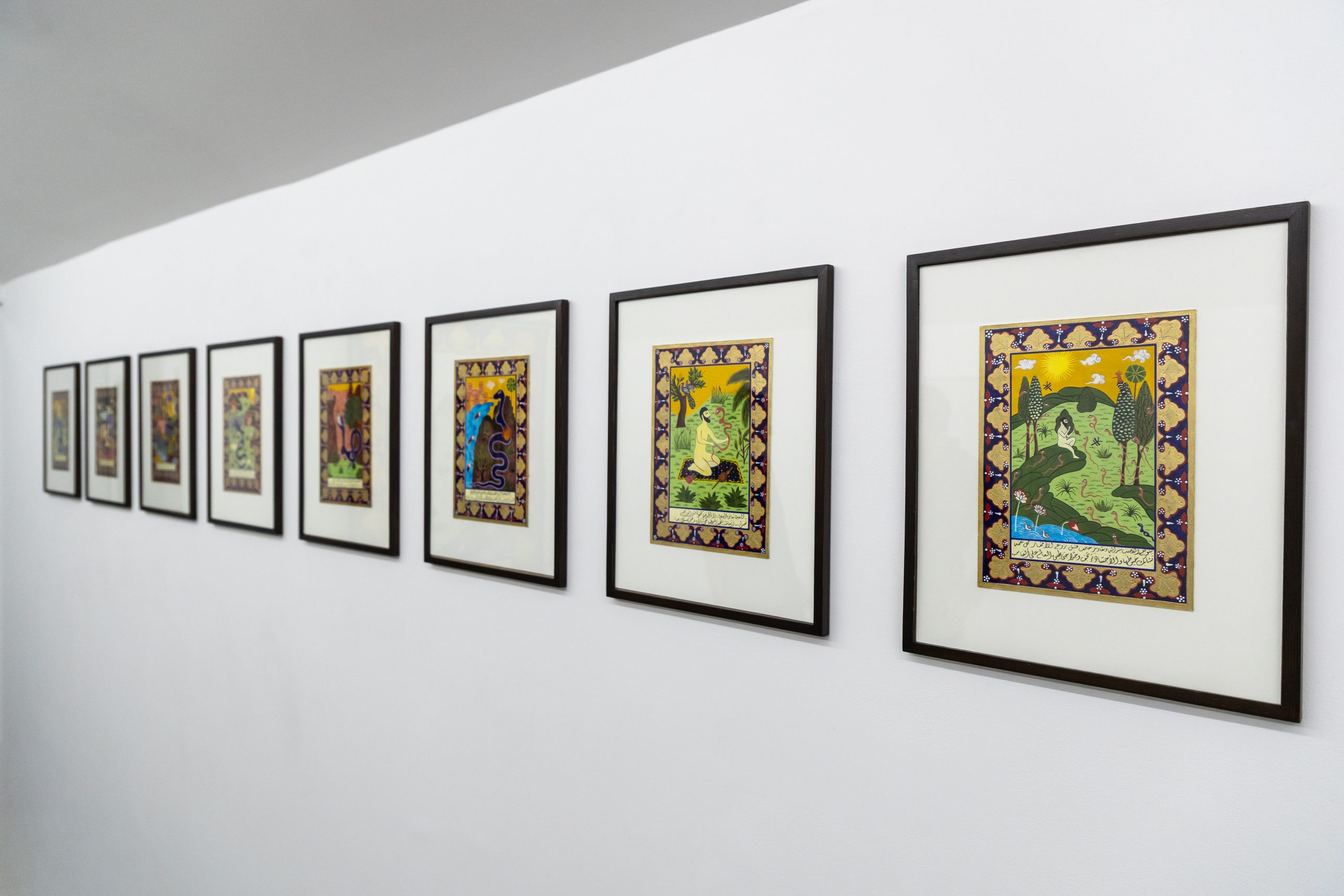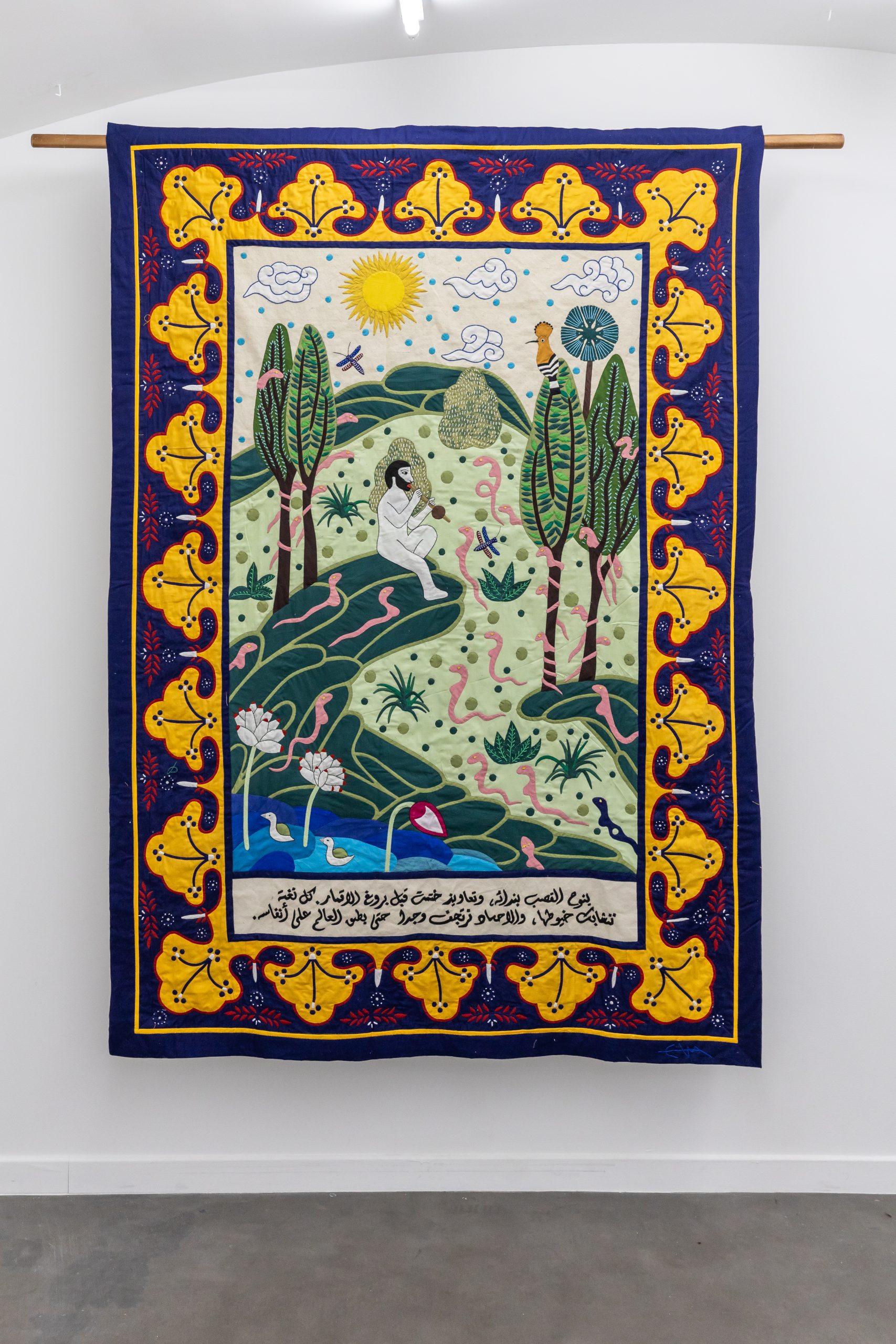
Born in Greece, raised in France, and now living in Egypt, where her past and present family ties converge, Esmeralda Kosmatopoulos has developed a practice shaped by movements between cultures and temporalities.
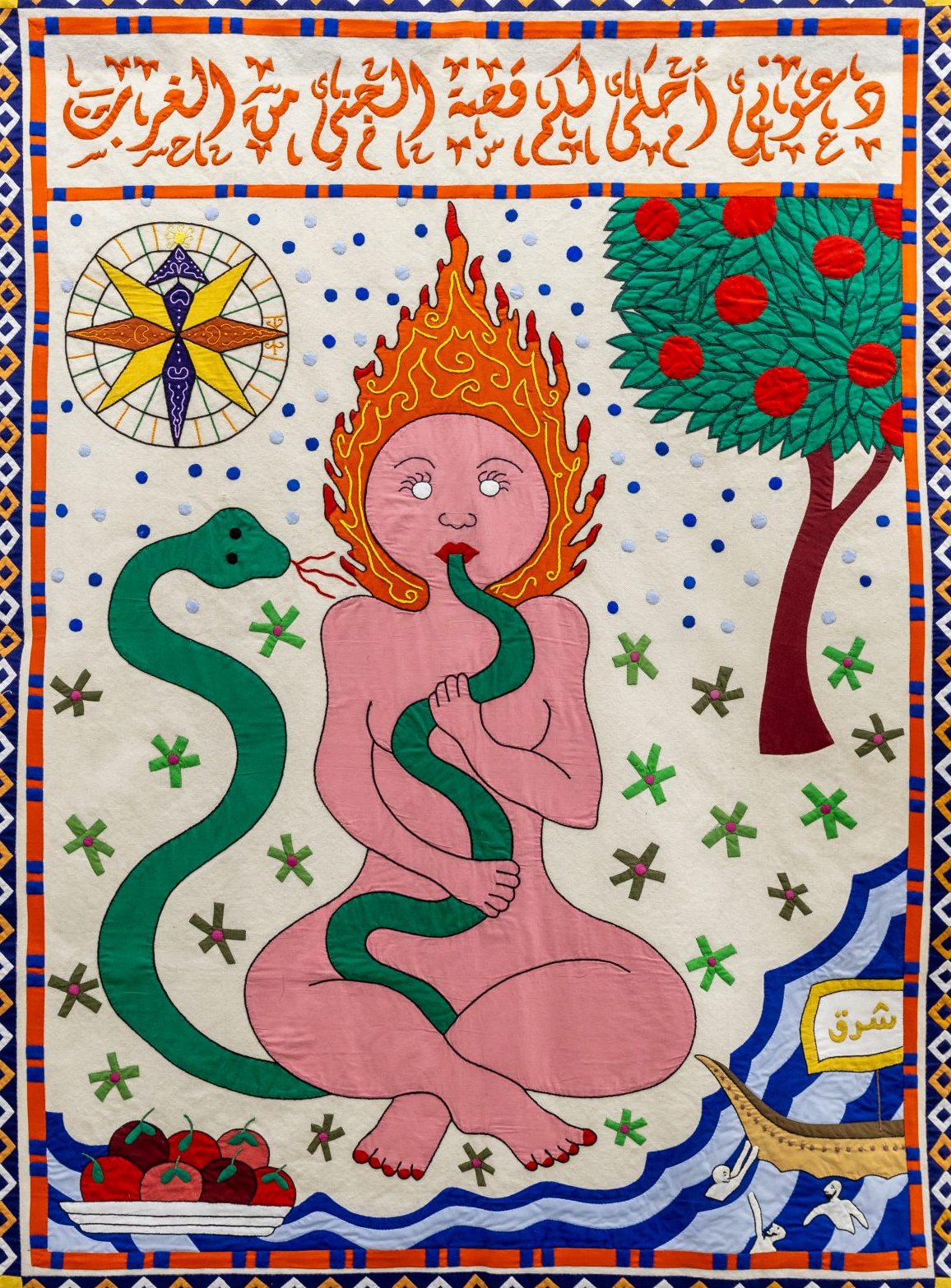
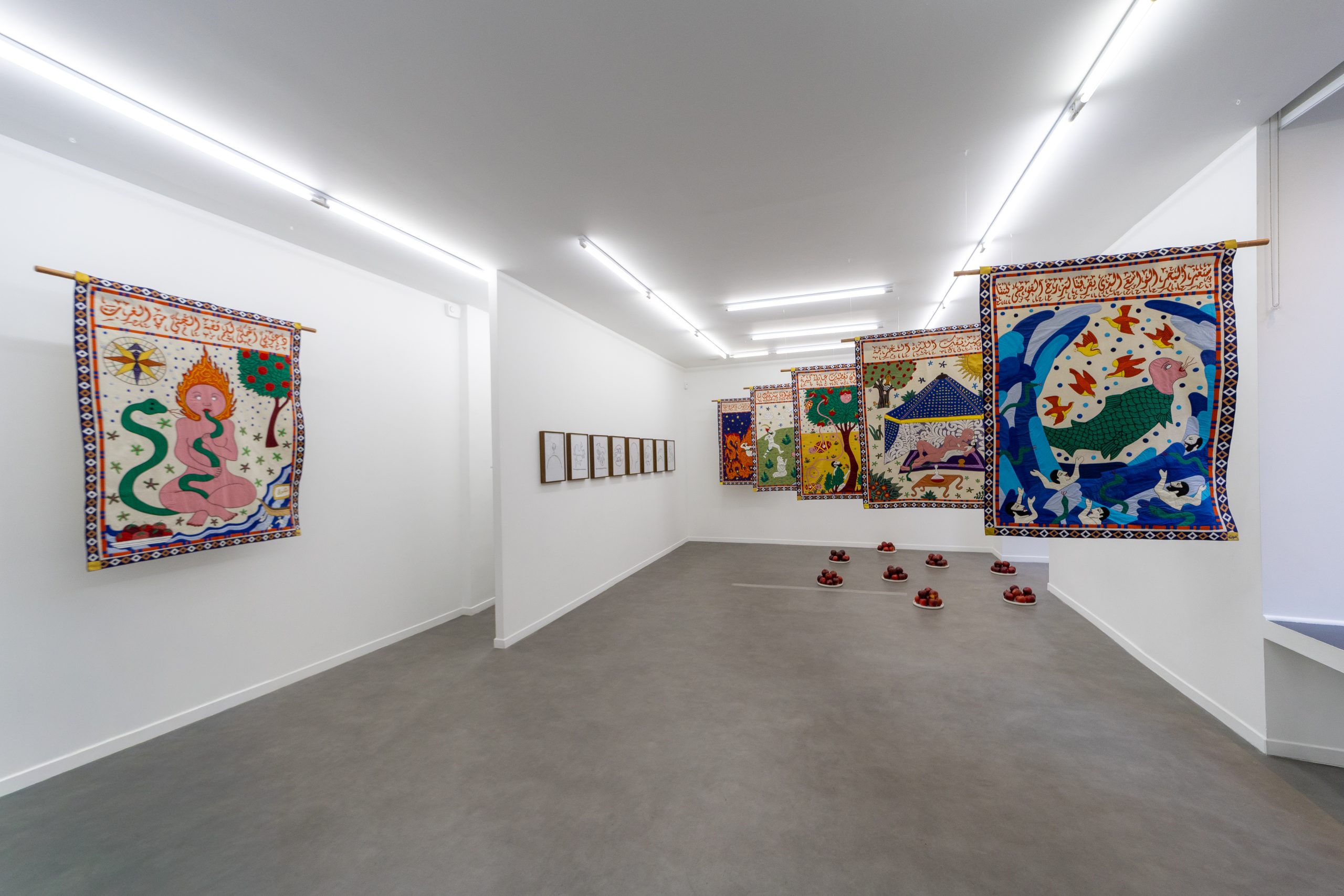
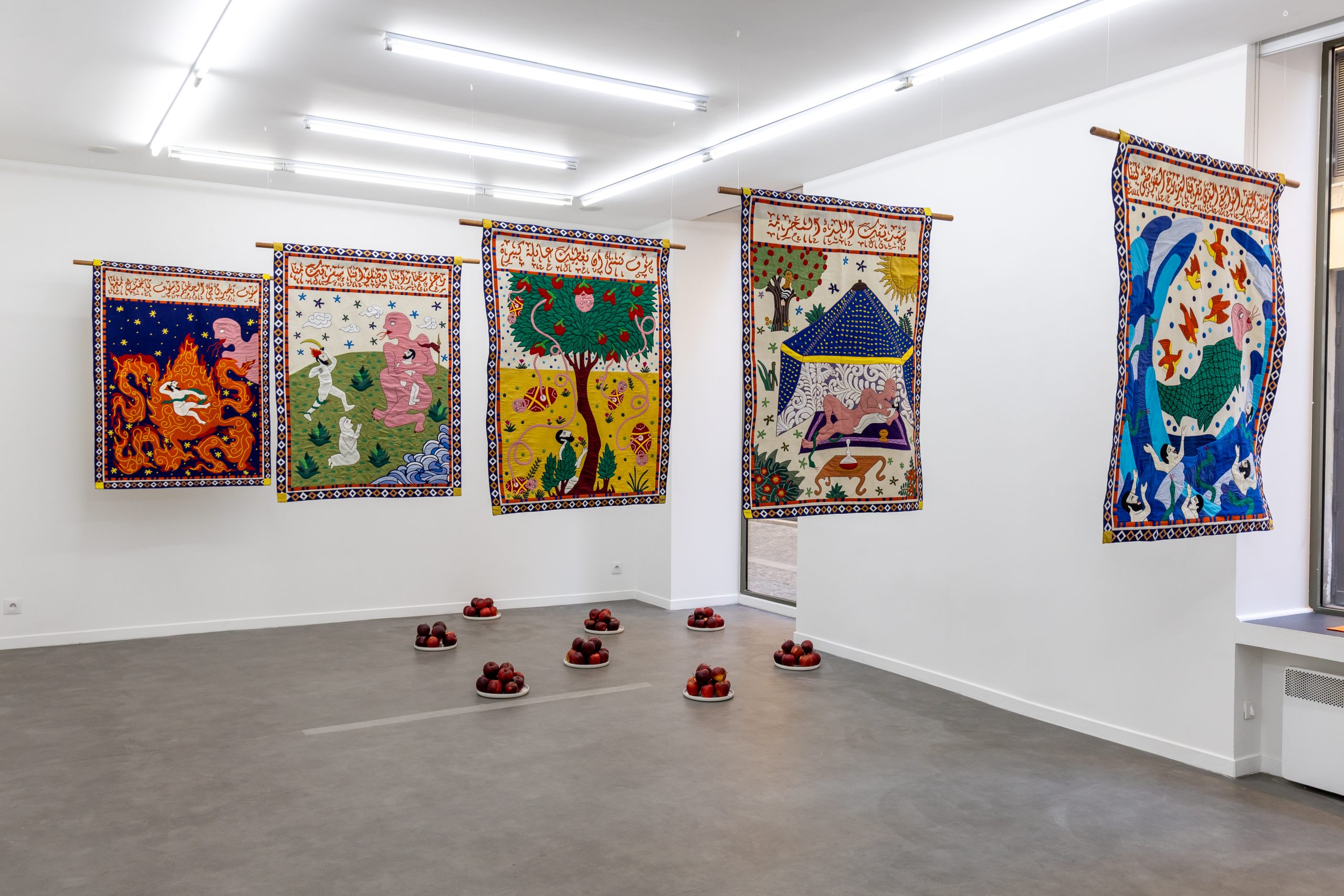
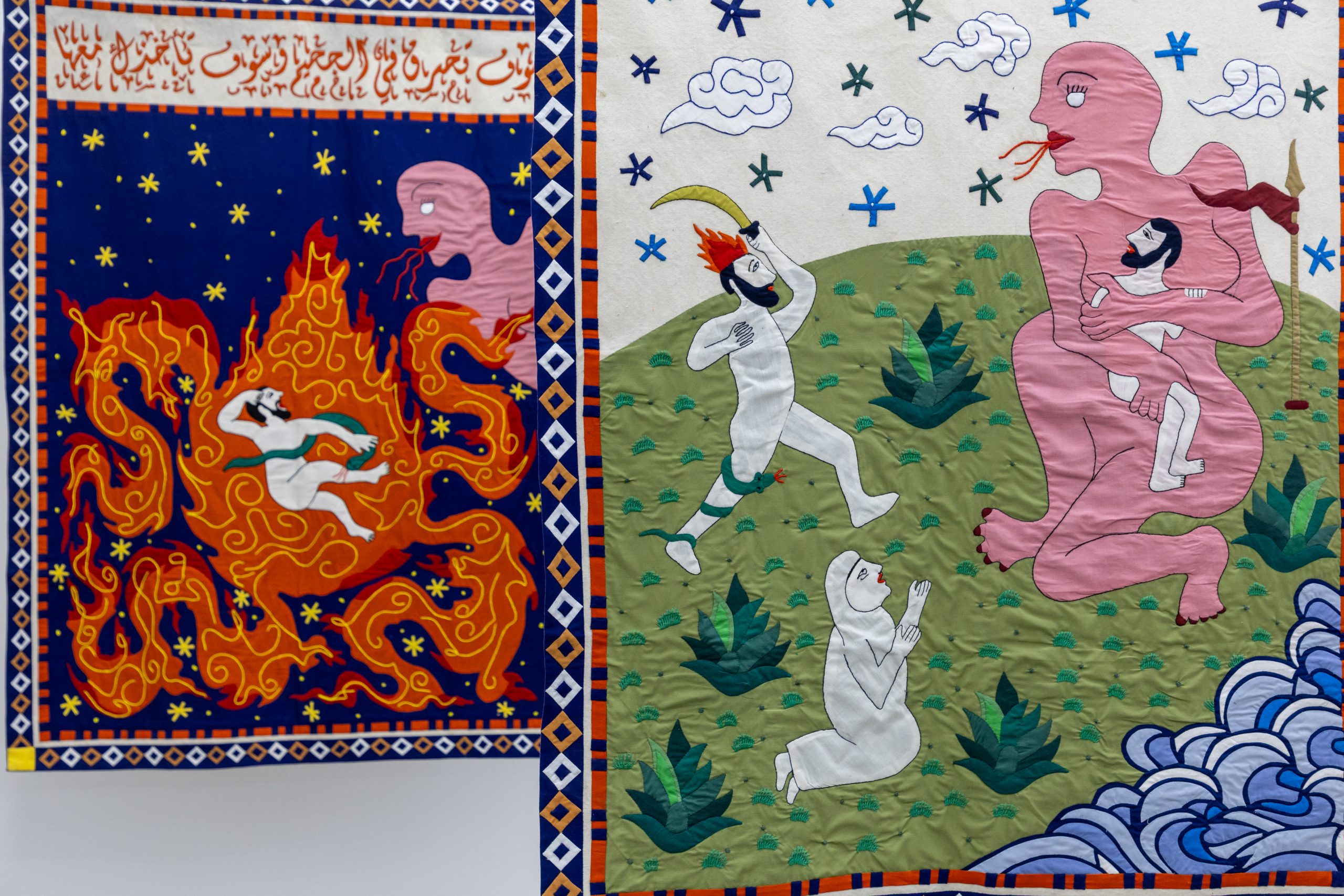
Esmeralda’s identity is woven from multiple cultures, much like khayameya wall hangings, an assemblage of fabric pieces in many shapes and colors. This ancient Egyptian craft technique, traditionally practiced by men, inspires her own textile patchworks, in which she creates allegorical odysseys that invite us into her inner world and speak to the difficulty of ambivalent identity, as well as femininity. Within them, she transforms herself into creatures from Greek, Ottoman, Sufi, and Persian mythologies: a composite chimera, a polymorphous djinn, or an undulating serpent.
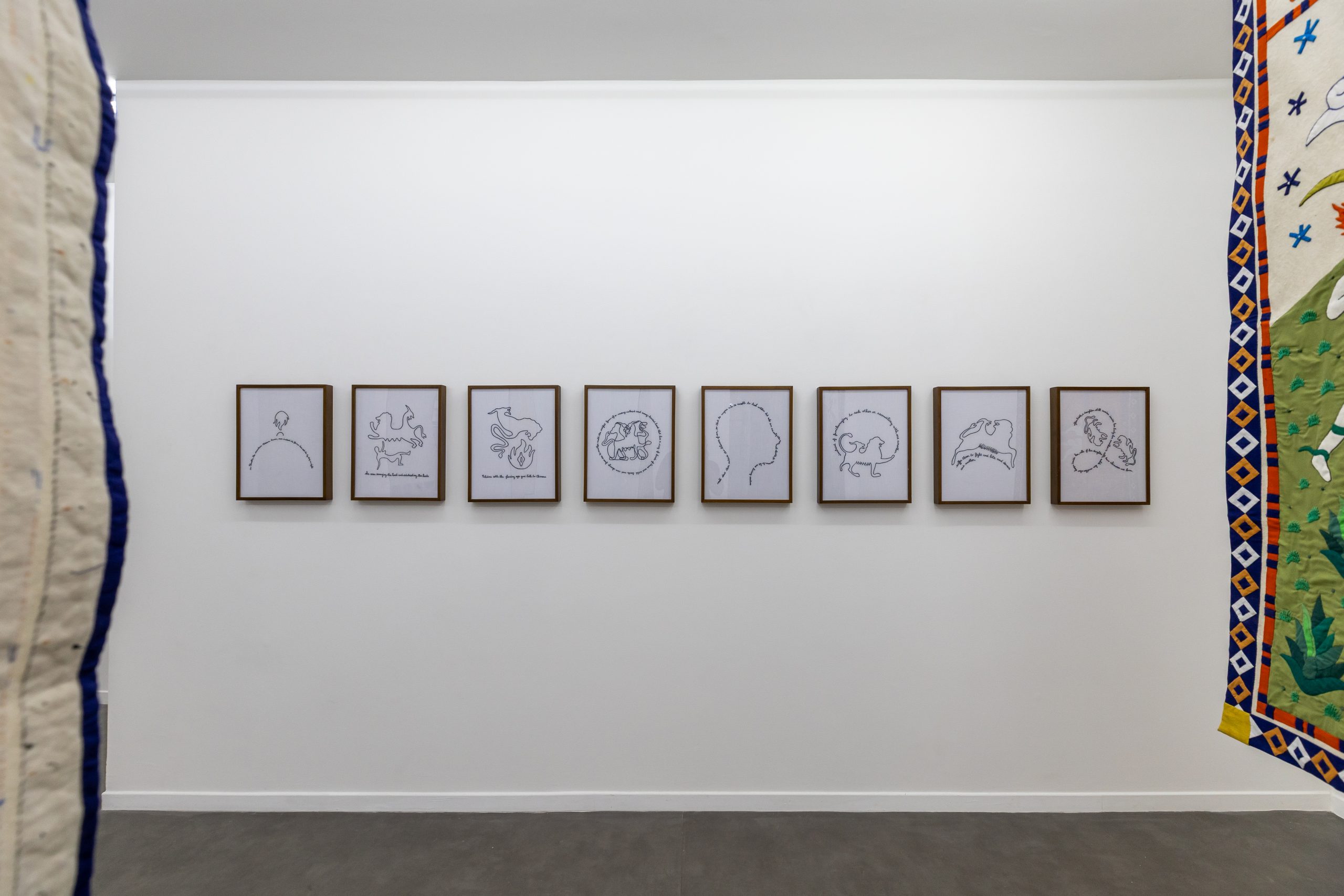
In the Chimera series,the artist embroiders the refined outlines of chimeras, bicephalous creatures sharing a single female body, marked by breast-like attributes whose forms are pliable, rounded, or protruding. The hybridization of bodies, the suppleness of forms, and the fluidity of the line evoke
a transmission, an exchange of femininity—both biological and cultural—between mother and daughter. Femininity itself becomes a fluid, composite, and multiple material.
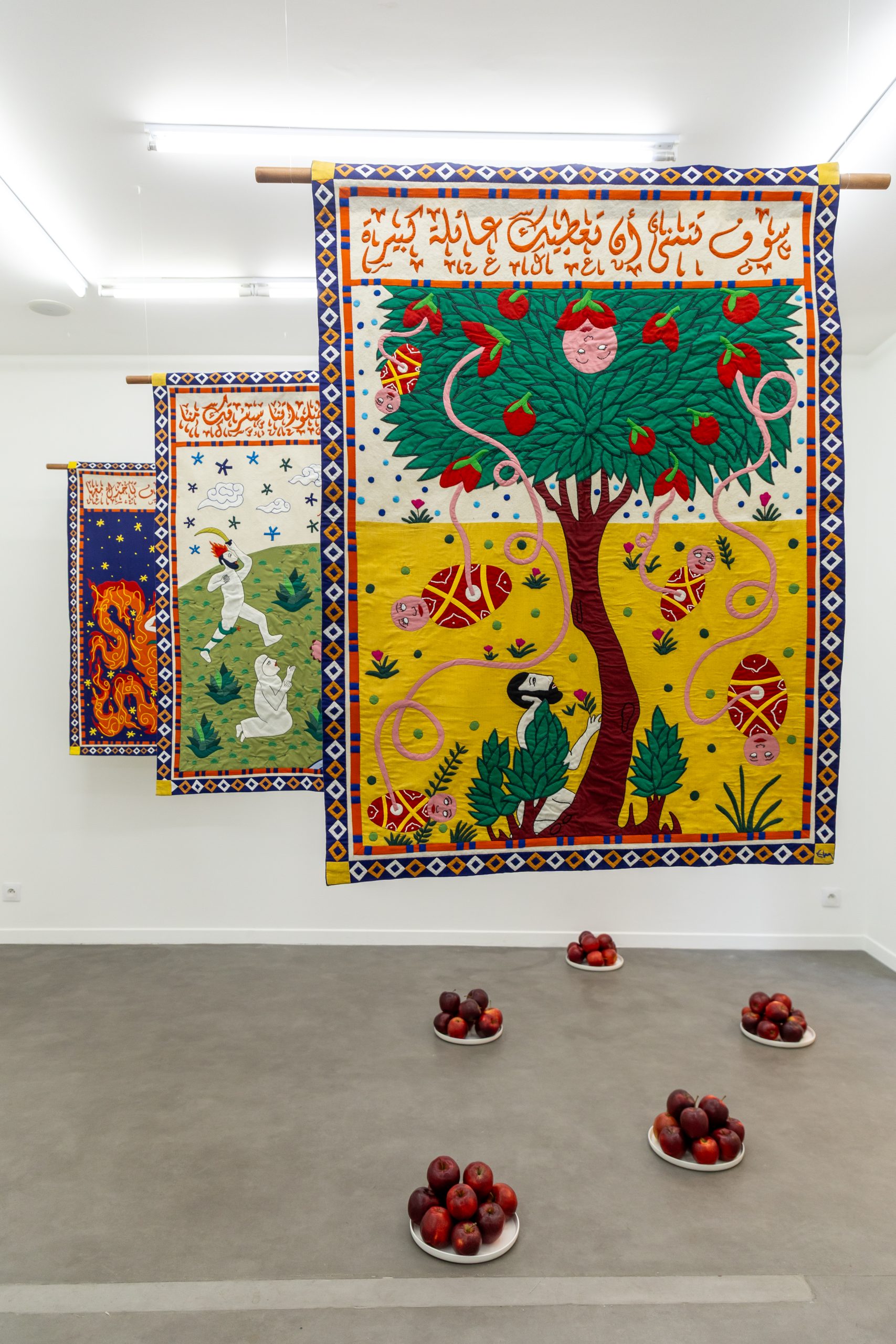
In the The jinny from the West series,this fluidity is expressed through snakes, waves, flowing sand, twisting flames, undulating ornaments, elastic umbilical cords, and the serpentine tongue of a colossal nude chimera—a caricature of the “bad wife” who fails to meet the demands of submission to men and fertility.
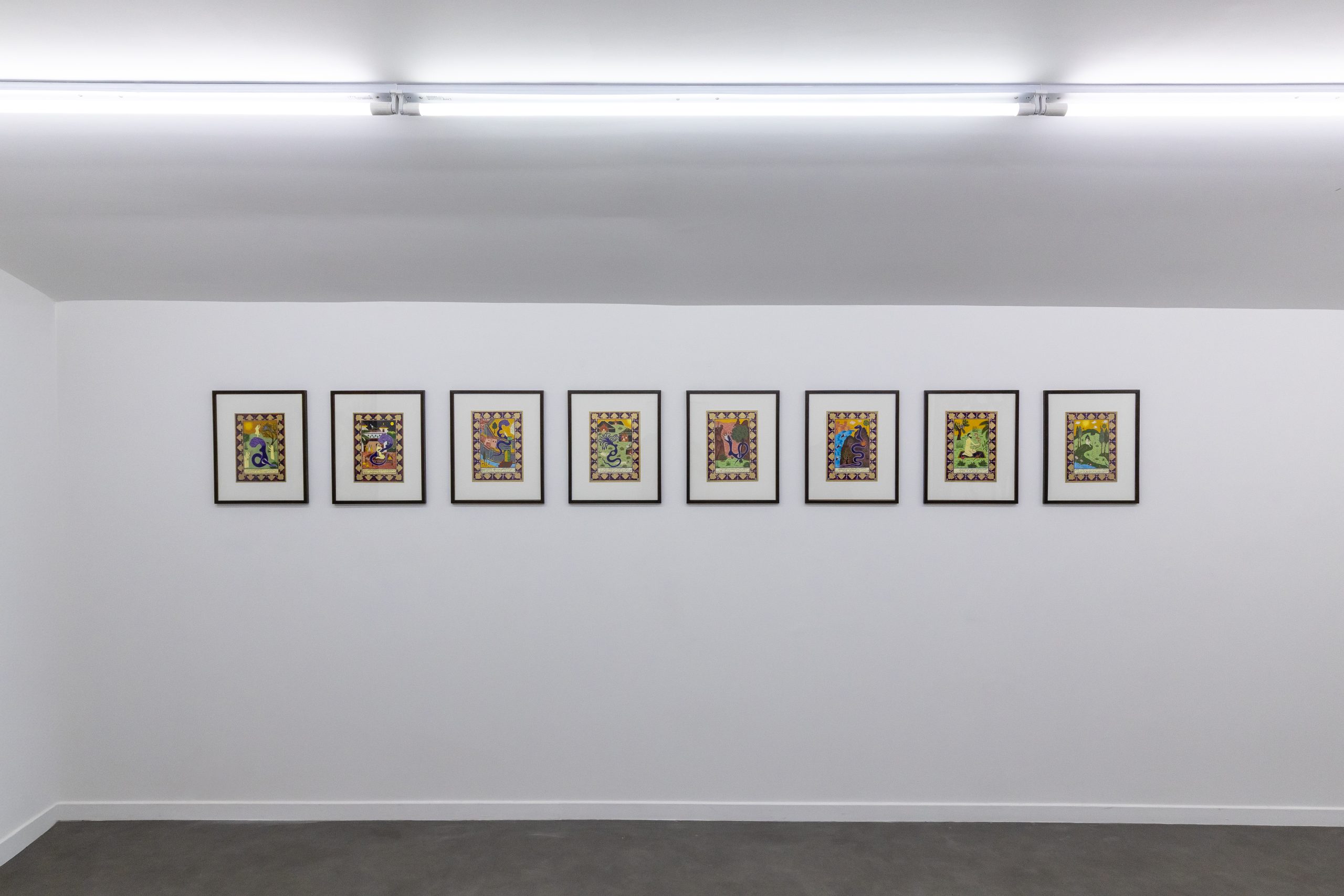
Fertility is also the common thread running through the Ḥayāt al-Ḥayāt series,a poetic phrase used to express the essence of life, while also playing on the word ḥayyah, meaning “snake,” once again. For female existence, like identity itself, is not a single path already traced in a straight line, but rather an undulation through the meanders of possibility. Here, woman becomes a “serpent,” and her womb is no longer the site of the egg or of motherhood, but of another kind of fertility: that of the precious emptiness of choice, of creation rather than procreation.
Aurélien Simon